English
×
Search
The most important factors that determine the machine configuration are the final pipe specifications, especially pipe outside diameter (OD) and wall thickness. Different pipe sizes require different mechanical strength, forming capability, and welding performance. So, the selected configuration of equipment and system must match the required pipe OD and thickness range, and understanding how pipe dimensions affect equipment selection helps you choose a more suitable spiral pipe mill configuration.
Pipe outside diameter is one of the main parameters that determines the forming requirements of a spiral welded pipe production line. Since spiral pipes are produced by continuously bending steel strips into a cylindrical shape, changes in pipe diameter directly influence the forming process and machine structure.
The pipe OD range defines the basic forming capability of a spiral pipe mill. For large diameter spiral pipes, the forming system need to be stronger and more stable to ensure accurate shaping of the steel strip and maintain pipe roundness during production, and the forming section usually requires higher structural rigidity, precise adjustment mechanisms, and stable strip guidance. These factors help control deformation accuracy and ensure smooth welding after forming.
To manufacturers producing multiple pipe sizes, the forming system must also provide sufficient flexibility to adjust according to different OD requirements while maintaining consistent production quality.
The roller system plays an important role in controlling the forming process. Different pipe diameters require different roller arrangements, dimensions, and adjustment ranges to achieve the desired pipe shape. A wider OD range requires a more flexible roller adjustment system to accommodate diameter changes efficiently.
Therefore, the selection and design of forming rollers should match the target pipe diameter range.
While pipe OD mainly affects forming requirements, wall thickness directly influences the mechanical load during forming, welding requirements, and overall equipment strength.
A thicker pipe wall requires more force to deform the steel strip and higher welding capability to ensure sufficient weld strength.
When wall thickness increases, the resistance of steel deformation also increases. The spiral pipe mill must provide enough forming force to gradually bend the steel strip into the required pipe shape.
For heavy wall spiral welded pipes, the equipment configuration usually requires:
Stronger forming machine structure
Higher capacity hydraulic systems
More rigid supporting components
Improved forming stability
Without sufficient mechanical strength, thick-wall pipe production may lead to unstable forming, dimensional variation, or reduced production efficiency.
Therefore, heavy-duty spiral pipe production lines are designed specifically for applications requiring large diameter and thick-wall pipes.
Wall thickness also has a direct influence on welding system selection.
Thicker pipe walls require deeper weld penetration and stronger weld seams. The welding equipment must provide suitable welding power, speed control, and process stability to achieve consistent internal and external weld quality.
For many spiral welded pipe applications, double-sided submerged arc welding is used to improve weld strength and reliability, especially for large diameter and heavy-wall pipes.
When selecting a spiral pipe welding machine, manufacturers need to consider:
Required wall thickness range
Steel grade
Welding speed
Weld penetration requirements
Production standards
Pipe weight increases significantly as wall thickness increases. Heavier pipes require stronger to maintain stable movement throughout production.
The driving system must provide sufficient traction force to:
Move the formed pipe smoothly
Maintain consistent production speed
Support continuous welding operations
For heavier spiral pipes, downstream handling is also important. Equipment such as a steel pipe delivery machine helps maintain stable pipe movement after forming and welding, reducing handling stress during continuous production.
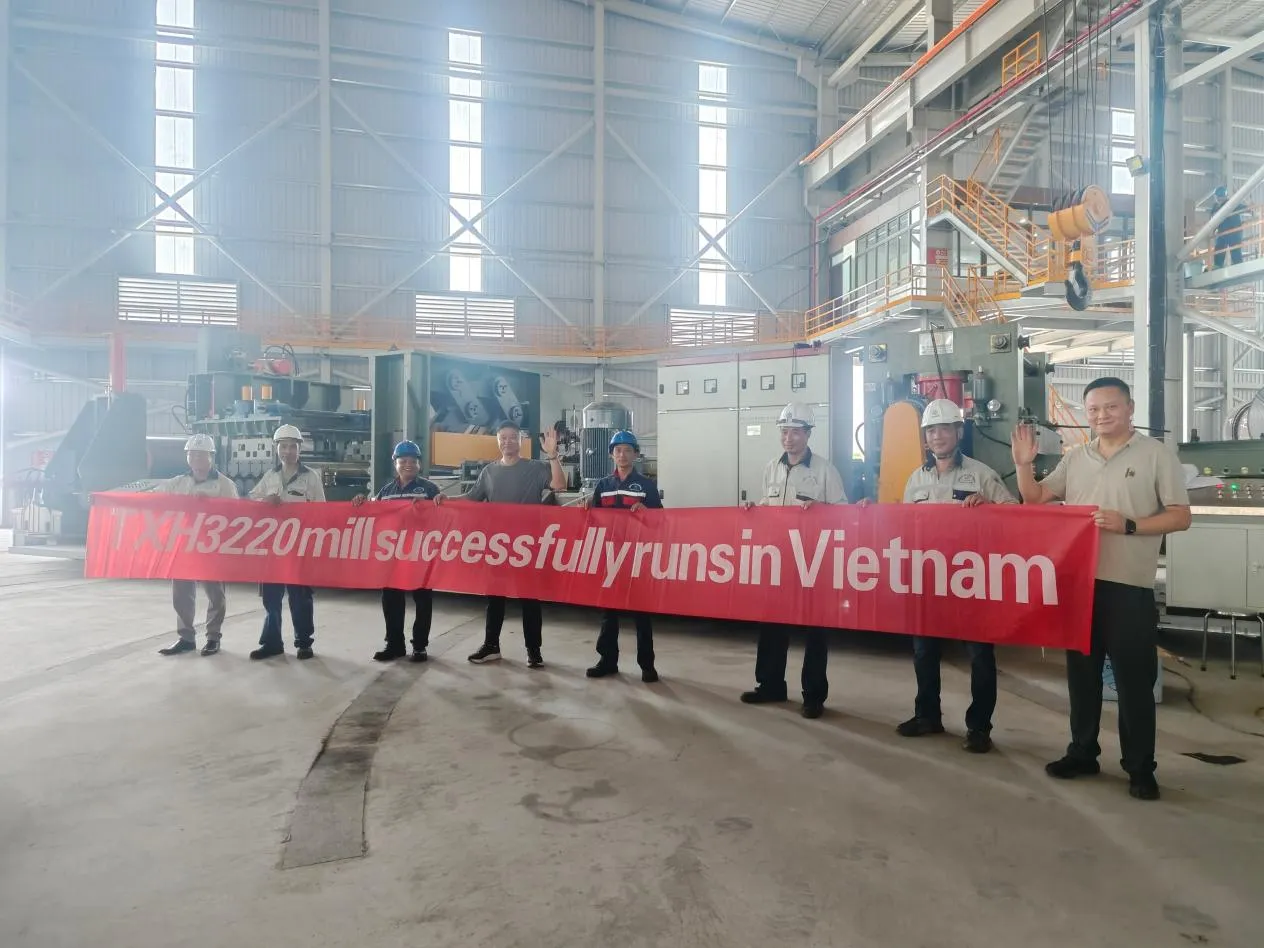
For heavy wall spiral pipes, the forming system and welding equipment must handle higher material resistance and production loads.
A Vietnam spiral pipe mill supplied by TianxiangHao was designed for pipe diameters from 630 mm to 3220 mm with a wall thickness of 25.8 mm. This type of project requires a strong forming structure, reliable welding capability, and stable driving performance to ensure consistent pipe quality during continuous production.
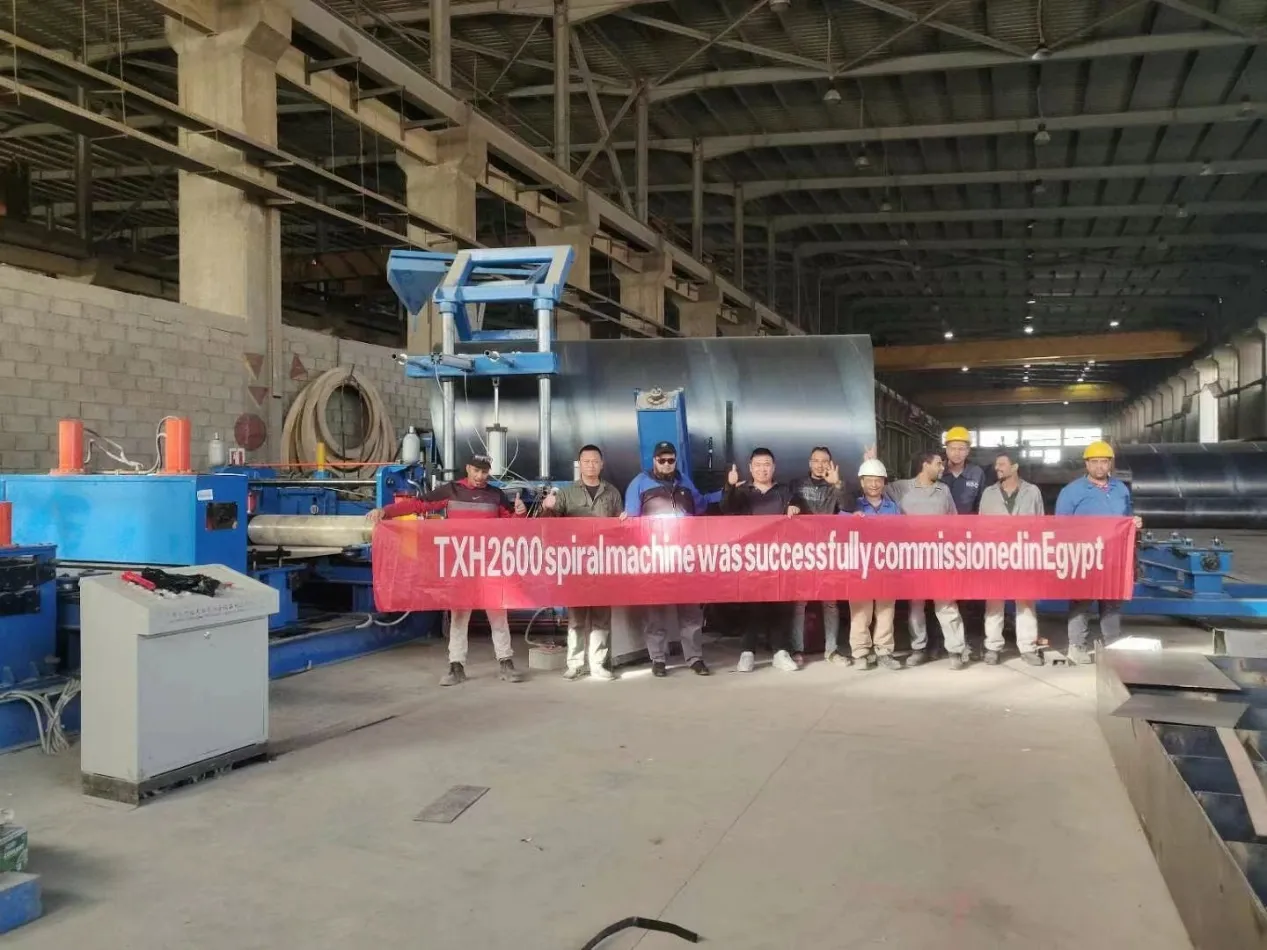
Thin wall pipes have different production requirements. TianxiangHao provided an Egypt spiral pipe mill for pipe diameters from 1400 mm to 2600 mm with wall thicknesses of only 3 mm. This project required accurate strip forming control and stable production performance for a thin wall spiral welded pipe production line. In such production line maintaining pipe roundness and dimensional consistency are more important than using heavy-duty forming force.
| Project | Pipe Specification | Main Configuration Focus |
|---|---|---|
| Vietnam Spiral Pipe Mill | Diameter: 630–3220 mm Wall Thickness: 25.8 mm | High forming strength, stable welding performance, and strong driving capability |
| Egypt Thin Wall Spiral Pipe Mill | Diameter: 1400–2600 mm Wall Thickness: 1–3 mm | Precise forming control, stable strip guidance, and thin-wall production accuracy |
Pipe OD and wall thickness are not independent factors. They work together to determine the overall configuration of a spiral pipe mill.
For example, there are some situations in the chart below:
| Pipe Specification | Main Configuration Requirements |
|---|---|
| Large OD + Thin Wall | High forming accuracy, stable strip control, flexible adjustment |
| Large OD + Thick Wall | Strong forming structure, powerful welding system, high-capacity driving system |
| Small OD + Thin Wall | Precise forming control and efficient production adjustment |
| Small OD + Thick Wall | Increased forming force and stronger welding capability |
A manufacturer producing large diameter pipeline pipes requires a different machine configuration from a manufacturer producing smaller structural pipes. The best equipment selection depends on the complete product range and future production requirements.
Before investing in a spiral pipe mill, manufacturers should define their target product specifications first. Selecting suitable spiral welded pipe manufacturing equipment requires evaluating pipe diameter range, wall thickness, steel grade, welding requirements, and expected production capacity.
| Category | Required Information | Details |
|---|---|---|
| Pipe Specification | Pipe Outside Diameter (OD) | Minimum and maximum pipe diameter range |
| Pipe Specification | Wall Thickness | Minimum and maximum wall thickness range |
| Pipe Specification | Pipe Length | Standard and maximum pipe length requirements |
| Material Requirements | Steel Grade | Carbon steel, stainless steel, or other materials |
| Production Requirements | Production Capacity | Required output (tons/year, tons/month, or tons/shift) |
| Production Requirements | Pipe Size Range | Single pipe size or multiple diameter production requirements |
| Welding Requirements | Welding Method | Required welding process and weld quality requirements |
| Automation Requirements | Automation Level | Manual, semi-automatic, or fully automatic production requirements |
| Application Requirements | Pipe Application | Water pipeline, oil & gas pipeline, structural pipe, or other applications |
| Standard Requirements | Production Standards | API, ASTM, EN, or other required standards |
| Factory Requirements | Plant Layout | Available factory space and equipment arrangement requirements |
Pipe OD and wall thickness are fundamental factors in spiral pipe mill design. Pipe diameter mainly affects forming system design, roller configuration, and production flexibility, while wall thickness determines forming force, welding requirements, and driving capacity. A properly configured spiral welded pipe production line is engineered around the specific pipe dimensions needed to produce.