English
×
Search
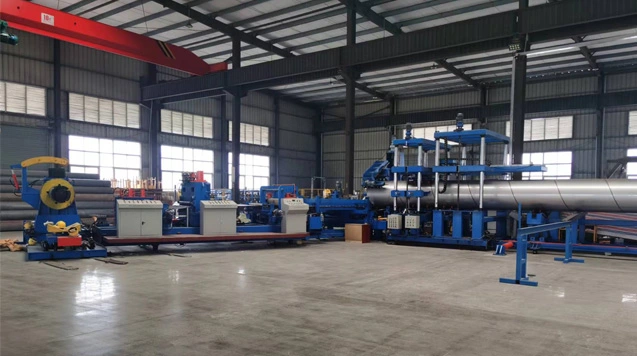
Oil & gas transmission and water infrastructure projects require steel pipes with different performance standards, production capacity, and quality control requirements. So a spiral pipe mill should consider the entire pipeline manufacturing process, from steel strip forming and welding to inspection, end preparation, and corrosion protection. For large-diameter transmission pipes, manufacturers usually combine the main spiral pipe forming line with a series of supporting equipment.
Before selecting equipment, manufacturers need to define the target pipe range and application requirements. Different pipeline projects require different production capabilities, and these factors directly influence the configuration of the spiral welded pipe production line.
The forming system, welding equipment, and downstream handling systems should match the required pipe dimensions. For example:
Large diameter pipes require stronger forming and supporting structures.
Heavy wall pipes require stable welding performance and higher inspection standards.
Different pipe sizes may require flexible adjustment systems to maintain production efficiency.
A properly designed line allows manufacturers to produce multiple pipe specifications without the need to rebuild the complete production process.
For large-scale oil, gas, and water transmission projects, manufacturers usually require large diameter spiral steel pipe production capability. The selected equipment should support the target diameter range, wall thickness, and future production requirements.
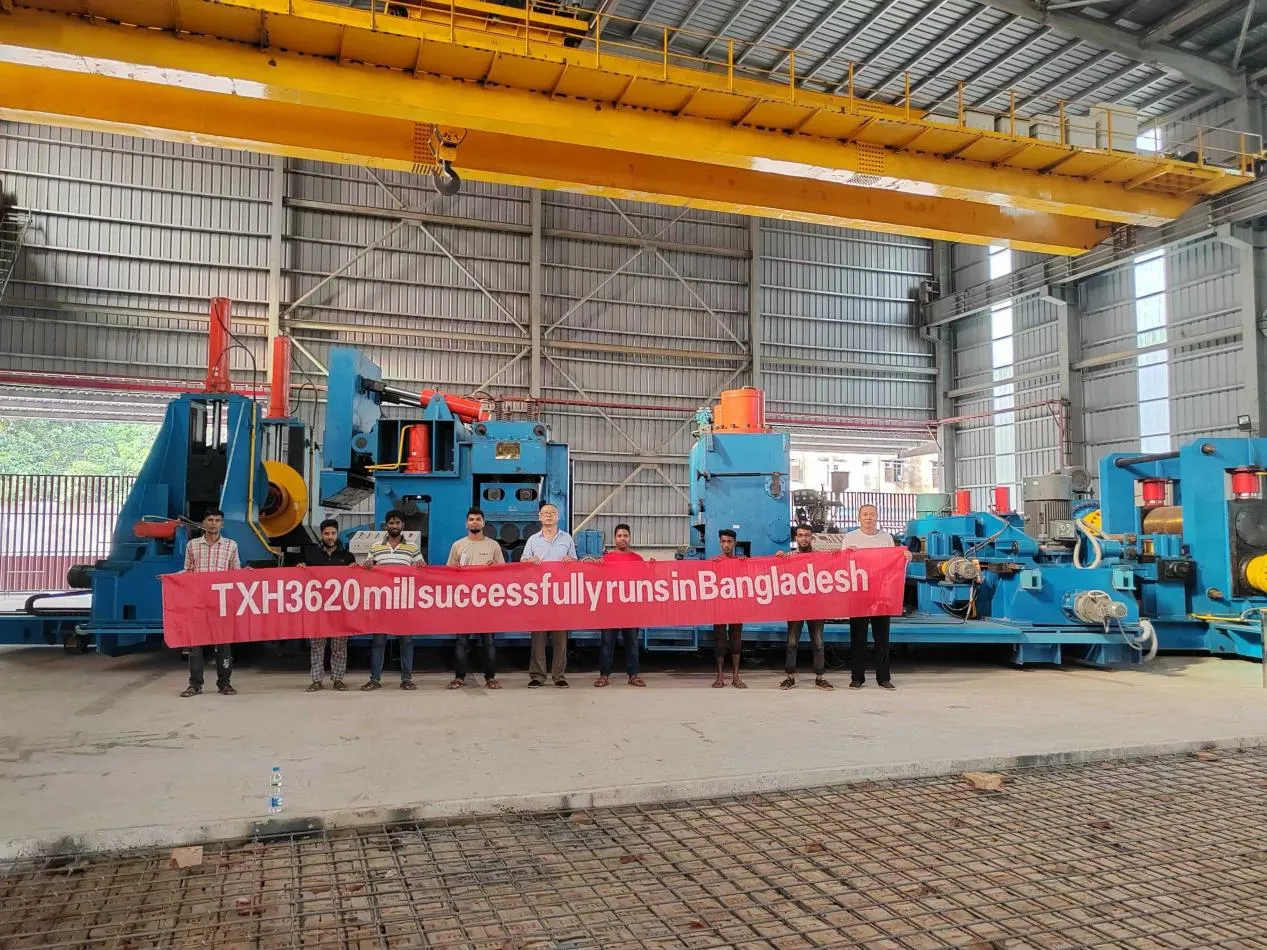
For a Bangladesh pipeline project, TianxiangHao supplied a spiral pipe mill designed for large-diameter pipe production. The equipment was configured to manufacture pipes with diameters from 630mm to 3620mm and wall thicknesses from 6mm to 25.4mm, meeting the requirements of large-scale transmission pipeline applications.
This project demonstrates a suitable forming system and supporting equipment help manufacturers maintain stable production performance across different pipe specifications.
Different pipeline applications have different requirements for steel performance.
Oil and gas transmission pipes usually focus on:
Weld quality
Pressure resistance
Long-term reliability
Compliance with project standards
And water transmission pipes place more emphasis on:
Corrosion protection
Service life
Stable production cost
The selected spiral pipe mill should therefore match the required material grade, welding process, and quality inspection system.
Large pipeline projects often require continuous production and stable output. Equipment configuration should consider:
Required annual production volume
Coil processing speed
Automation level
Material handling efficiency
Higher automation reduces manual adjustment and improves consistency in long production.
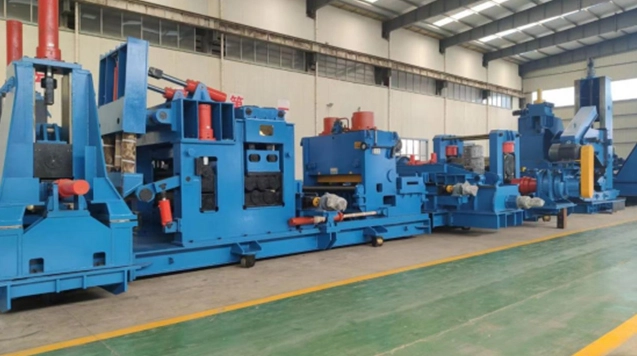
The main spiral pipe mill is the core of the production system. It transforms steel coils into spiral welded pipes through forming, welding, cutting, and transportation processes.
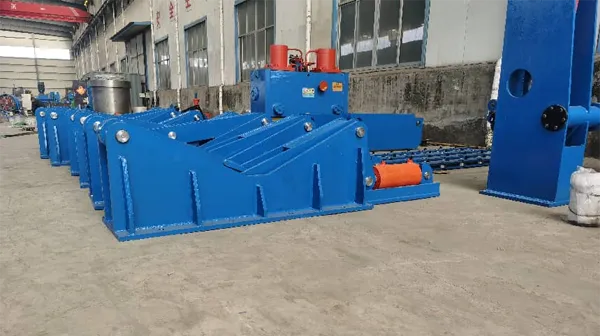
The forming section determines whether the production line can achieve stable pipe geometry.
Important factors include:
Pipe diameter range
Steel strip width
Material thickness
Forming accuracy
A suitable forming system helps maintain consistent pipe roundness and dimensional accuracy, especially for large-diameter transmission pipes.
For transmission pipe manufacturing, welding quality is one of the most important factors affecting final pipe performance.
Spiral pipe mills commonly use submerged arc welding technology because it provides:
Stable welding quality
Strong weld seams
High production efficiency
For demanding applications such as oil and gas pipelines, double-sided welding configurations can improve weld penetration and overall reliability.
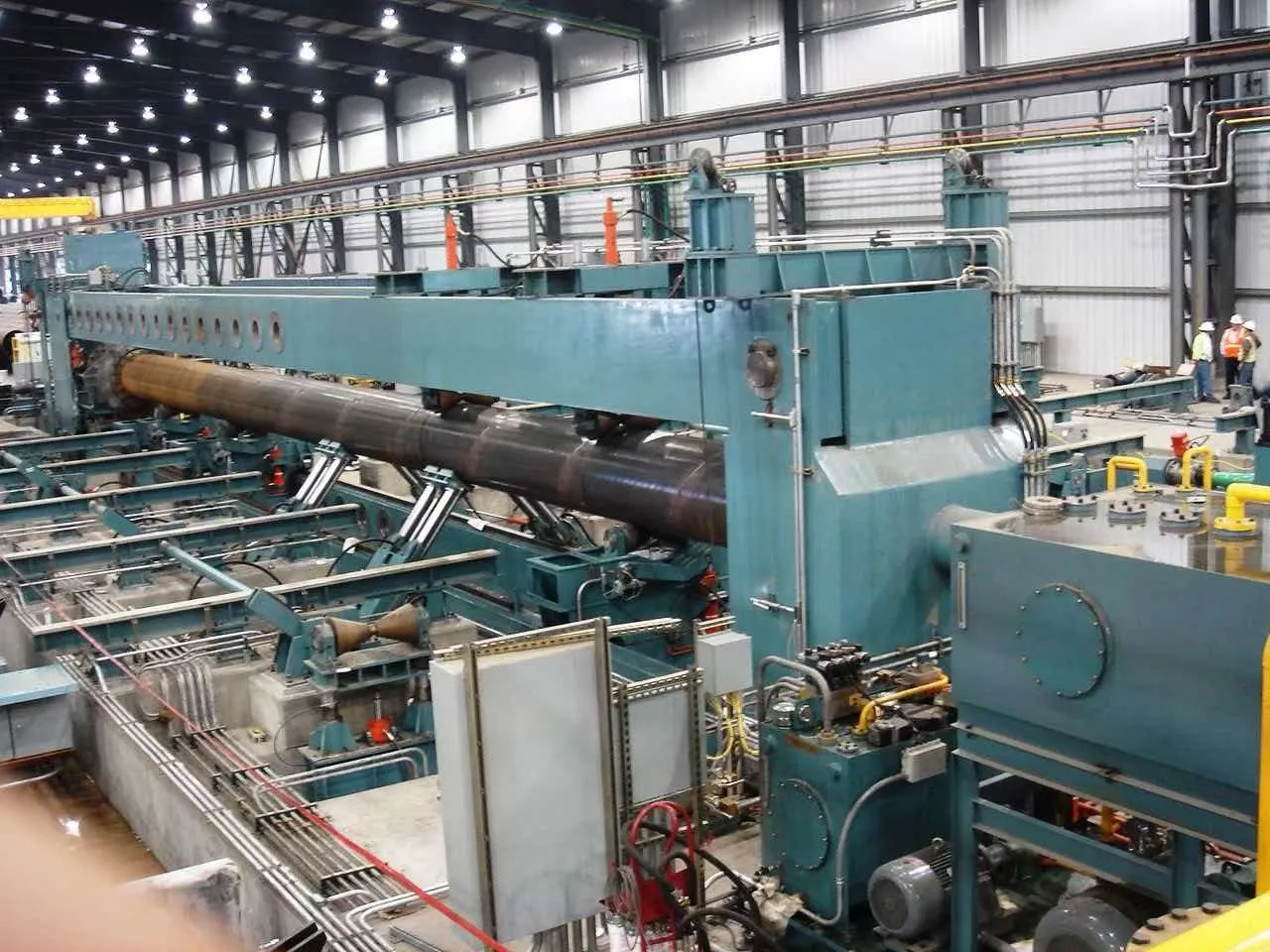
After welding and forming, pipes need to be checked before delivery. A pipe hydrotester applies internal water pressure to evaluate whether the pipe can withstand required operating conditions.
This process helps identify:
Leakage problems
Weak points
Structural defects
The hydrostatic testing machine should match:
Pipe diameter
Pipe length
Required pressure level
Production speed
When selecting testing equipment, manufacturers should consider pipe diameter, length, and pressure requirements. A well configured pipe hydro testing machine helps verify pipeline performance before transportation and installation.
TianxiangHao supplied a hydraulic testing solution for steel pipe inspection in the United States. The project shows how hydrotester selection should match pipe dimensions and testing requirements. By integrating pressure testing equipment into the production workflow, manufacturers can verify pipe performance before transportation and installation.
Instead of treating inspection as a separate process, manufacturers can try to integrate testing systems into the production line.
Industrial X-ray inspection is used to examine internal weld quality and identify potential defects that may affect pipe performance.
It helps detect issues such as:
Incomplete welding
Porosity
Internal discontinuities
Ultrasonic testing (UT) provides another non-destructive testing method for checking weld and pipe quality. Compared with simple visual inspection, UT can evaluate internal conditions and support more detailed quality control.
For pipeline projects with strict quality requirements, integrating ultrasonic pipe inspection equipment into the production process helps manufacturers to monitor weld quality and improve inspection efficiency.
Pipe end preparation directly affects the efficiency of pipeline construction. Before field welding or connection, pipe ends usually require beveling to create a suitable welding surface.
A professional pipe beveling machine helps achieve:
Accurate edge preparation
Consistent welding conditions
Improved installation efficiency
The beveling system should match:
Pipe diameter
Wall thickness
Production capacity
For large transmission pipes, automatic or semi-automatic beveling equipment can be considered to improve processing consistency and reduce preparation time.
Oil and gas pipelines often operate underground or in challenging environments. Coating systems help reduce corrosion risks and extend service life.
Common solutions include:
3PE coating
Polyethylene coating
Other anti-corrosion protection systems
The coating line should be selected according to project requirements and installation conditions.
Water transmission pipelines require reliable protection because they often operate for decades after their installation.
The coating process should consider:
Soil conditions
Water environment
Maintenance requirements
Different projects require different equipment combinations. A typical configuration strategy can be summarized as follows:
| Application | Recommended Configuration |
|---|---|
| Oil & Gas Transmission Pipe | Spiral Pipe Mill + SAW Welding + Hydrotester + X-Ray/UT Inspection + Beveling + Anti-Corrosion Coating |
| Water Transmission Pipe | Spiral Pipe Mill + Hydrotester + UT Inspection + Beveling + Protective Coating |
| Large Infrastructure Pipeline | Heavy Duty Spiral Pipe Mill + Automated Handling + Inspection System + Coating Line |
Selecting a spiral pipe mill supplier includes more than purchasing individual machines. Manufacturers need a partner who can understand project requirements and provide a complete production solution.
TianxiangHao provides spiral welded pipe production lines and supporting equipment, including spiral pipe mills, hydrostatic testing machines, pipe beveling machines, X-ray inspection equipment, ultrasonic testing systems, and coating-related solutions. A complete engineering approach helps pipe manufacturers establish reliable production capacity for oil, gas, water transmission, and infrastructure projects.
A typical configuration includes a spiral pipe forming line, welding system, hydrotester, inspection equipment, beveling machine, and coating system based on project requirements.
Yes. A properly configured line can manufacture different pipe applications by adjusting forming capability, testing systems, and downstream equipment.
Hydrotesting verifies pipe pressure resistance and helps identify leakage risks before transportation and installation.
Key factors include pipe diameter, wall thickness, steel grade, production capacity, welding requirements, inspection standards, and future expansion needs.
The inspection configuration depends on project standards. For demanding transmission pipelines, additional non-destructive testing systems are commonly integrated to improve quality control.
A successful spiral pipe mill configuration should be based on the final application, pipe specifications, and quality requirements rather than a fixed equipment list. By combining the right forming system, welding technology, hydrotester, inspection equipment, beveling machine, and coating solutions, manufacturers can build a production line suitable for oil & gas transmission and water pipeline.