English
×
Search
A spiral welded pipe mill converts steel coils into finished spiral welded pipes through a series of continuous processes. Understanding these stages can help buyers evaluate whether the equipment configuration, production capacity, and quality control system meet their requirements.
Steel coils are the main raw material for spiral welded pipe manufacturing. Before entering the forming section, the steel coil is loaded onto an uncoiler and continuously fed into the production line. Since steel coils may experience deformation during transportation and storage, proper preparation is necessary to ensure stable processing.
The main operations at this stage include:
Steel coil loading
Coil uncoiling
Strip leveling
Material feeding control
The coil preparation section directly affects the stability of the entire production line. A reliable steel coil uncoiler machine ensures smooth strip feeding and helps maintain consistent production during continuous spiral pipe manufacturing.
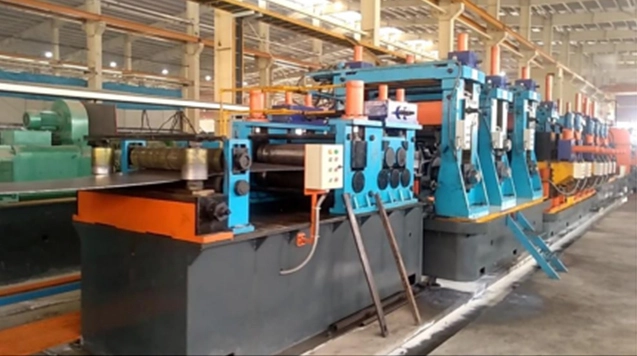
After uncoiling, the steel strip enters the leveling and alignment section. The purpose of this stage is to ensure that the steel strip reaches the forming machine in the correct position with consistent flatness and stability.
The main processes include:
The leveling system removes deformation and residual stress from the steel strip.
Alignment rollers guide the strip accurately into the forming section. Proper alignment helps avoid problems such as uneven forming angles or inconsistent pipe diameter.
For specific applications, edge preparation equipment may be used before welding. Proper edge preparation helps achieve stronger weld joints.
This stage directly influences forming accuracy and welding quality.
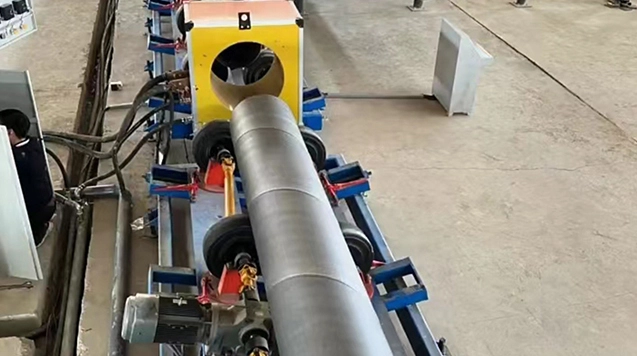
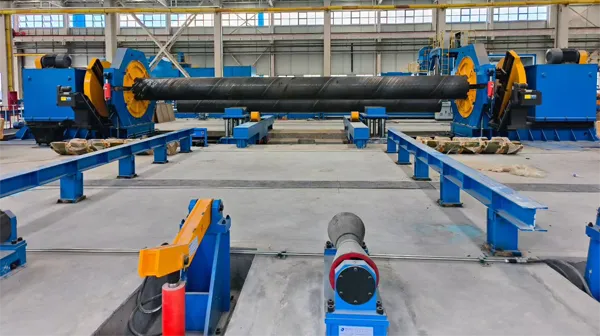
Spiral forming is one of the most important stages in a spiral welded pipe mill. During this process, the flat steel strip passes through a series of forming rollers and gradually changes into a cylindrical pipe shape with a spiral seam.
Key factors controlled during spiral forming include:
Pipe diameter
Forming angle
Strip feeding speed
Pipe roundness
The forming system determines the production flexibility and dimensional accuracy of the final pipe. A properly designed spiral pipe forming machine (Internal Link) helps manufacturers produce different pipe specifications with stable quality.
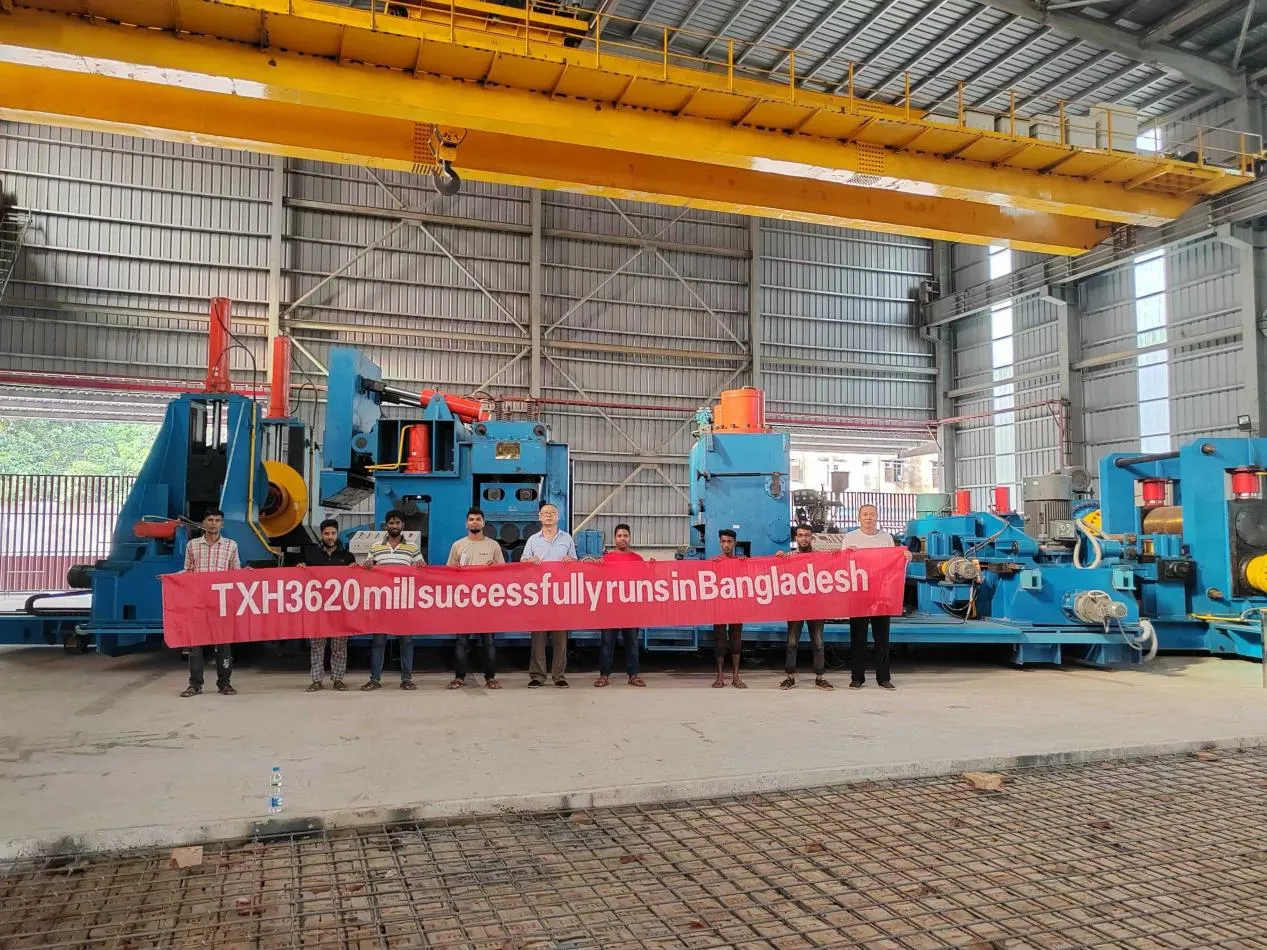
A spiral pipe production line supplied for a customer in Bangladesh was designed to manufacture pipes with diameters ranging from 630 mm to 3620 mm, with a wall thickness range of 6 mm to 25.4 mm.
The wide production range required a flexible forming system capable of adjusting different pipe specifications while maintaining stable forming accuracy.
The production line integrated key processes including:
Steel coil preparation
Strip forming
Spiral seam welding
Pipe cutting
Quality inspection
This project demonstrates how a properly configured spiral forming system enables manufacturers to produce multiple pipe sizes on one production line, which is especially important for customers serving different pipeline and infrastructure projects.
After the steel strip is formed into a spiral pipe shape, the spiral seam needs to be welded to create a complete pipe structure. Most spiral welded pipe mills use submerged arc welding technology. Modern submerged arc welding machine solutions provide stable welding performance and support continuous production for large diameter spiral welded pipes.
The welding process usually includes:
The internal welding process creates the initial connection between the two edges of the steel strip and improves weld penetration.
External welding reinforces the seam structure and improves overall strength and durability.
A reliable welding system helps ensure:
Strong weld joints
Stable pipe performance
Better pressure resistance
For buyers, welding capability is one of the key factors when evaluating the overall performance of a spiral welded pipe production line.
After welding, the spiral welded pipe is cut into required lengths. Automatic cutting equipment allows the production line to maintain continuous operation while achieving accurate pipe length control.
The cutting stage mainly affects:
Finished pipe length accuracy
Production efficiency
Handling convenience
For projects requiring different pipe sizes and lengths, flexible cutting solutions can improve production adaptability.
Quality inspection is an essential step, which verifies whether pipes meet required standards and application requirements.
Common inspection methods include:
Used to check surface conditions and visible defects.
Measures:
Outside diameter
Wall thickness
Pipe length
Roundness
Used to evaluate:
Tensile strength
Hardness
Pressure resistance
Ensures the spiral seam meets quality requirements.
Advanced inspection equipment can further improve quality control accuracy. Ultrasonic pipe testing equipmen helps detect potential welding issues.
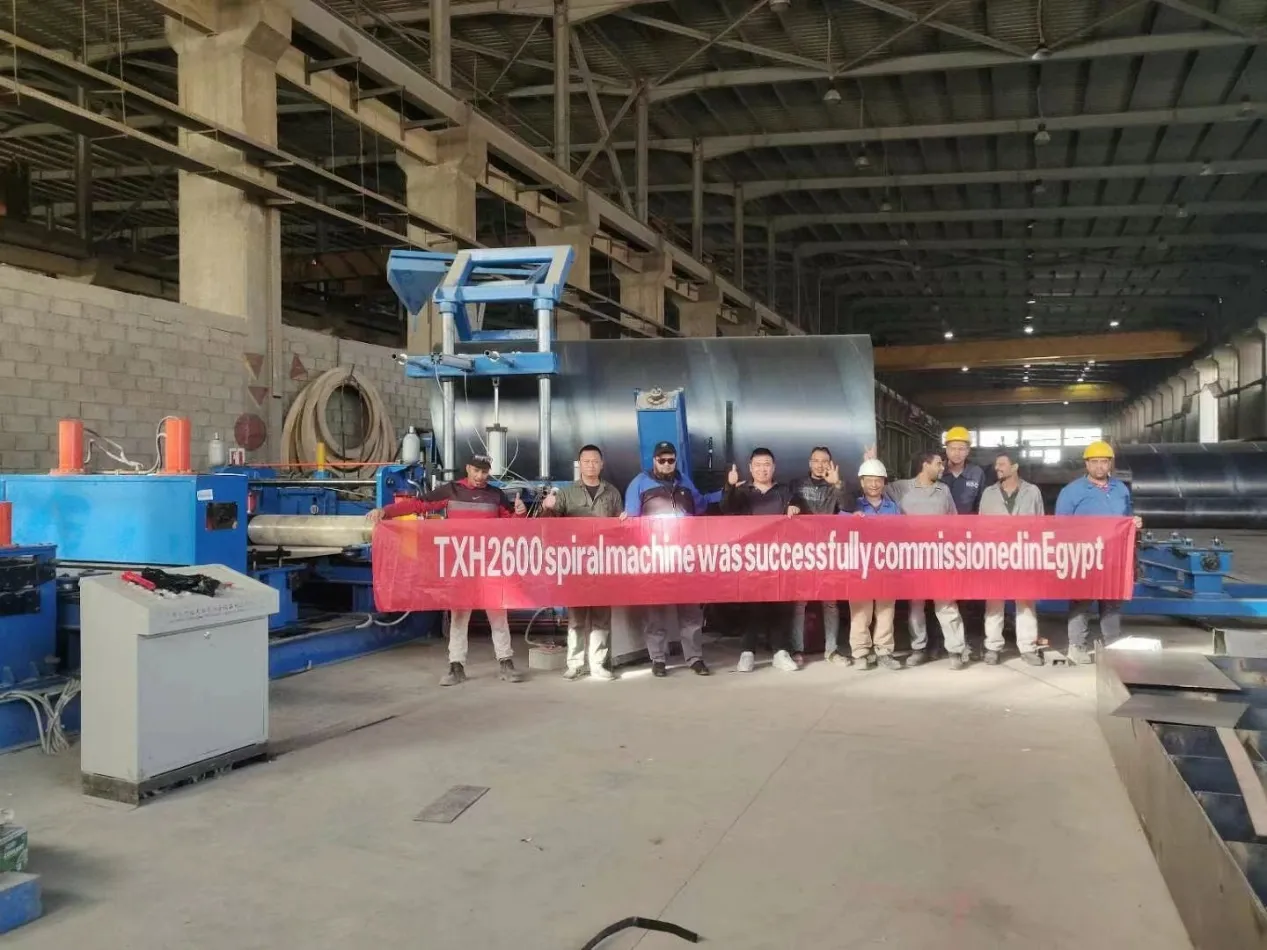
Different applications require different spiral welded pipe production capabilities. Thin-wall pipe manufacturing requires precise control of forming, welding, and inspection processes.
For an Egyptian customer, TianxiangHao provided a thin-wall spiral pipe production line capable of manufacturing pipes with diameters from 1400 mm to 2600 mm and wall thicknesses of 3 mm.
Because thin-wall pipes have higher requirements for dimensional accuracy and forming stability, the production line needed to maintain precise control throughout the manufacturing process.
The project highlights the importance of:
Accurate strip feeding
Stable spiral forming
Consistent welding performance
Strict quality inspection
Different production requirements require different equipment configurations.
| Production Requirement | Recommended Equipment Consideration |
|---|---|
| Large diameter pipe production | Heavy-duty forming system |
| High production capacity | Automatic feeding and welding system |
| High-quality pipeline projects | Advanced inspection equipment |
| Multiple pipe specifications | Flexible forming adjustment |
Understanding these relationships helps buyers select a production line that matches their current needs and future expansion plans.
The forming and welding stages have the greatest impact because they directly determine pipe dimensions, weld strength, and overall structural performance.
A complete production line usually includes:
Coil uncoiler
Leveling system
Shear and butt welding machine
Edge milling machine
Alignment equipment
Delivery machine
Spiral forming machine
Welding system
Pipe cutting system
Inspection equipment
Yes. By adjusting forming parameters and production settings, one spiral welded pipe mill can produce pipes with different diameters and specifications.
Inspection equipment helps verify pipe quality, welding performance, and compliance with industry standards before delivery.
Buyers should consider production capacity, pipe size range, automation level, welding technology, inspection requirements, and future production plans before selecting equipment.
The main production stages include steel coil preparation, strip leveling, spiral forming, seam welding, pipe cutting, inspection, and finishing processes. Every production stage plays an important role in determining final pipe quality and production efficiency. Knowing about each stage allows buyers to make better equipment decisions and build a production solution that matches their business requirements.