Which Welding Parameters Most Affect Spiral Weld Seam Quality?
In spiral submerged arc welding (SAW), weld quality depends on several connected parameters. Current, voltage, and travel speed affect penetration, weld width, and molten pool stability; heat input reflects their combined effect. Wire, flux, groove dimensions, and forming accuracy also influence the seam.
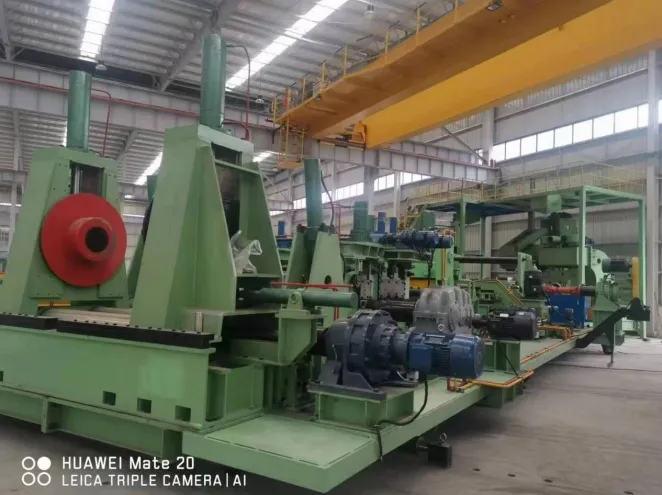
For manufacturers operating a spiral welded pipe production line, settings must match the material, wall thickness, and production conditions.
What Are the Main Welding Parameters Affecting Spiral Weld Seam Quality?
The main SAW parameters are:
Welding current: Affects penetration and reinforcement.
Arc voltage: Influences arc length, weld width, and surface formation.
Welding speed: Controls heating time and molten pool stability.
Heat input: Reflects the combined thermal effect of current, voltage, and speed.
Settings must match material grade, wall thickness, groove geometry, and welding position.
How Do Welding Current, Voltage, and Speed Affect Weld Formation?
Welding current determines arc energy and the melting capacity of the base material. Insufficient current may cause shallow penetration and incomplete root fusion. Increasing current improves penetration, but excessive current can create an oversized molten pool, excessive reinforcement, undercut, or burn-through. Select current according to thickness, groove design, and wire diameter.
Arc voltage affects arc length and heat distribution. Low voltage may produce a narrow, raised bead with poor edge spreading. A suitable increase improves weld width and metal distribution. Excessive voltage can destabilize the arc, widen the weld, and increase porosity tendencies. Coordinate voltage with current and speed.
Welding speed determines the time the arc acts on each joint section. Excessive speed reduces heat per unit length and may cause insufficient penetration, lack of fusion, or discontinuous welds. Too low a speed increases heat accumulation and may cause burn-through, excessive width, grain coarsening, and deformation. TWI also notes that travel speed affects bead width and the risk of porosity or undercut in SAW.
Why Must Heat Input Be Properly Controlled?
Heat input results from current, voltage, and travel speed. It affects molten pool size, cooling conditions, and the microstructure of the weld and heat-affected zone.
Too low: May cause incomplete penetration and lack of fusion at the root or groove sidewalls.
Too high: May enlarge the heat-affected zone, promote grain coarsening, reduce toughness, and increase deformation.
Maintain a suitable process window. Unlike arc energy, heat input accounts for process efficiency, including the SAW efficiency factor, as TWI explains.
What Other Factors Influence Spiral Weld Seam Quality?
Other conditions also require control:
Wire diameter and extension: Diameter affects current density and melting behavior and must match the current range. Excessive extension can cause overheating and arc instability.
Flux type and particle size: Flux must suit the wire and base material. Particle size affects permeability and slag coverage; moisture or contamination can increase porosity and slag inclusions.
Groove design and joint gap: Groove angle, root face, and gap affect penetration. A large gap may cause burn-through; an insufficient gap can hinder root fusion. Accurate edge alignment is essential.
Preheating and interpass temperature: For some high-strength or thick-wall pipes, preheating reduces cooling speed and cold-cracking risk. Control interpass temperature according to the qualified procedure.
How Can Consistent Welding Quality Be Maintained in a Spiral Pipe Mill?
Quality requires coordination between material preparation, forming, welding, and inspection. Before welding, clean oil, rust, and oxide scale from joint surfaces, and check groove dimensions, wire condition, and flux moisture.
During production, maintain stable power output, accurate wire feeding, and synchronized forming. Forming angle, squeeze pressure, and welding position must keep edge alignment and joint gaps consistent. Monitor current, voltage, and speed; automated alerts can flag deviations. Also check weld width, reinforcement, edge transition, and forming alignment.
Use production trials to compare penetration, weld width, reinforcement, and internal inspection results across parameter combinations. This helps identify suitable settings without improving one indicator at the expense of overall quality.
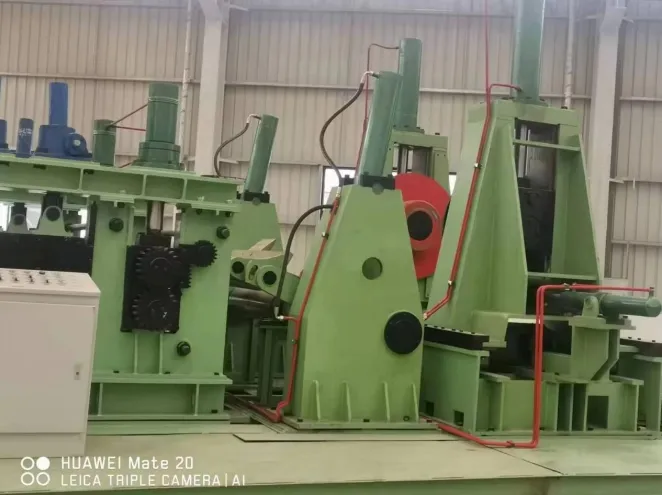
Link inspection results and welding records to each production batch. Ultrasonic pipe testing equipment can identify internal defects and provide feedback for process adjustment.
FAQs About Spiral Weld Seam Quality
1. Which welding parameter has the greatest influence on spiral weld seam quality?
Current, voltage, and speed work together. Their combined effect determines heat input, penetration, weld width, and molten pool stability.
2. What happens when welding current is too high?
Excessive current may cause excessive reinforcement, undercut, burn-through, and an unstable molten pool.
3. How does welding speed affect weld penetration?
Excessive speed may reduce penetration and cause incomplete fusion. Too low a speed can increase heat accumulation and deformation.
4. Should the same welding parameters be used for different pipe specifications?
No. Adjust settings for material grade, wall thickness, groove geometry, and welding conditions. Verify them through production trials and inspection.