How Do Coil Width, Steel Grade and Wall Thickness Affect Spiral Pipe Mill Performance?
Introduction
Selecting a spiral pipe mill requires balancing three critical variables: coil width, steel grade, and wall thickness. Together, they affect forming conditions, equipment selection, and the specifications that the complete production line must support.
How Does Coil Width Affect Spiral Pipe Mill Performance?
The Relationship Between Coil Width, Pipe Diameter, and Forming Angle
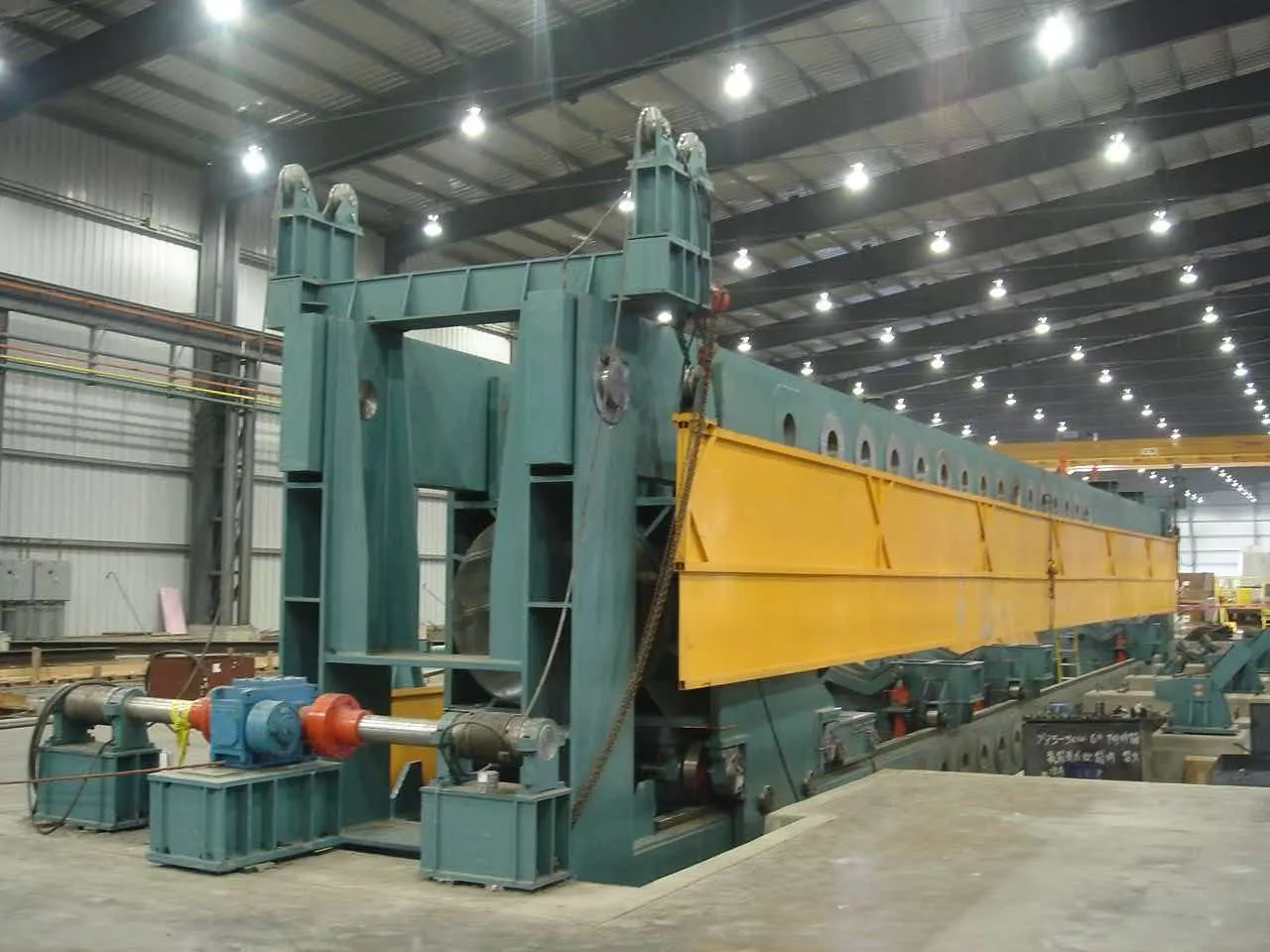
In spiral pipe manufacturing, steel strip is uncoiled, leveled, edge-prepared, and fed into the forming section at a selected angle. Forming rolls shape the strip into a spiral pipe, whose edges are then joined and welded. Coil width and forming angle are therefore important geometric variables.
Coil width and forming angle are geometrically related to the resulting pipe diameter. Any simplified geometric formula should be used only with clearly defined variables and assumptions; actual operating limits depend on the forming system. Buyers should ask the supplier to confirm the coil-width and forming-angle combinations available for each required diameter. The procurement implication is simpler than the formula: a coil-width specification cannot be evaluated without the forming-angle window it will run in. Ask the supplier to confirm the width–angle–diameter combinations it will guarantee.
A mill designed for a particular width range may support multiple pipe diameters through forming-angle adjustments, but this does not mean that every diameter can be produced from every coil width. Buyers should request confirmation that the proposed width and forming-angle settings are suitable for each required pipe size.
Why Coil-Width Accuracy Matters
Incoming coil-width tolerance and forming-angle adjustment should be checked against the required pipe dimensions. Buyers should ask the supplier to specify acceptable strip-width tolerances and explain how the proposed setup accommodates the planned product range. Tianxianghao’s Egypt project reference lists pipe diameters of 1,400–2,600 mm and wall thicknesses of 1–3 mm, while its Vietnam reference lists diameters of 630–3,220 mm and a maximum wall thickness of 25.4 mm. These ranges illustrate different product requirements, but do not by themselves establish how frequently either line changes diameter or which forming adjustments are used.
Explore Tianxianghao’s Vietnam Project
How Steel Grade Affects Equipment Load
Steel grade affects material behavior during forming and the requirements for welding and quality control. The suitability of a spiral mill should therefore be assessed against the actual grade, wall thickness, pipe dimensions, and applicable product specification. Buyers should ask the supplier to identify the grades covered by its proposal and provide relevant technical evidence or production references where available. A grade listed in a brochure is not, by itself, proof that every grade–thickness combination has been demonstrated in production.
Wall Thickness and System Matching
Wall thickness must be assessed together with pipe diameter and steel grade. A mill’s maximum-thickness rating does not establish that the thickest pipe can be produced across its entire diameter range. Buyers should ask the supplier to confirm the required OD × WT combinations and identify any limits on the proposed operating range. Where hydrostatic testing is required, the tester should also be checked against the specified pipe dimensions and test pressure. The Egypt and Vietnam project references illustrate different thickness ranges, but further technical documentation is needed to establish the precise equipment configurations used.
Why Must Coil Width, Steel Grade, and Wall Thickness Be Evaluated Together?
These variables should be assessed as a combined product schedule, not as separate maximum ratings. For each required pipe size, buyers should list the outside diameter, wall thickness, steel grade, and available coil-width range. The supplier should then confirm which combinations are supported by the proposed machine and identify any conditions that require further technical review or process validation.
What Should Buyers Confirm Before Ordering a Spiral Pipe Mill?
Before ordering a spiral pipe mill, buyers should confirm:
· Coil width: Available minimum and maximum widths, incoming strip-width tolerances, and compatibility with the required pipe sizes.
· Steel grade: Specified material grades, applicable product standards, and available evidence of relevant production or process qualification.
· Wall thickness: Supported thicknesses for the required pipe diameters and steel grades, including any operating limits.
· Forming conditions: Available forming-angle range and the setup requirements for changing product sizes.
· Quality requirements: Dimensional tolerances, welding requirements, inspection methods, and trial-production acceptance criteria.
Conclusion
Coil width, steel grade, and wall thickness must be evaluated together when selecting a spiral pipe mill. Buyers should provide a complete product schedule and ask the supplier to confirm the required OD × WT × grade combinations, forming conditions, and quality requirements. This project-specific assessment is more useful than relying on separate maximum ratings for coil width, pipe diameter, or wall thickness.
FAQ
1. How does coil width affect the diameter of a spiral welded pipe?
Coil width and forming angle influence the resulting pipe diameter. The available combinations depend on the forming system and its operating limits, so buyers should confirm the required pipe sizes with the supplier.
2. Does a wider steel coil always allow a mill to produce larger pipes?
No. A wider coil does not automatically guarantee a larger pipe. The achievable diameter also depends on the forming setup and machine limits. Buyers should confirm the supported coil-width and diameter combinations for their intended product range.
3. Why is steel grade important when selecting a spiral pipe mill?
Steel grade affects material behavior during forming and the requirements for welding and quality control. Buyers should confirm that the proposed process is suitable for the specified grade and wall thickness, and request relevant technical evidence or production references where available.
4. Why can large-diameter, thin-walled pipes be difficult to form?
Large-diameter, thin-walled pipe requires careful attention to forming conditions and dimensional tolerances. Buyers should confirm the machine’s supported diameter–thickness combinations and the supplier’s proposed dimensional inspection criteria. Tianxianghao’s Egypt project reference lists diameters of 1,400–2,600 mm and wall thicknesses of 1–3 mm, but further technical records are needed to establish the specific forming and quality-control measures used.
Explore Tianxianghao’s Egypt Project