How Should Pipe Handling Conveyor Systems Be Arranged in a Spiral Welded Pipe Production Line?
In a spiral welded pipe production line, pipe handling conveyor systems connect strip steel pretreatment with guiding, pre-bending, and spiral forming. Their arrangement affects strip feeding stability, alignment, and production continuity.
The layout should follow the production sequence and the mill manufacturer's design. Conveyor positions and settings must match the strip specifications and the requirements of adjacent equipment rather than rely on universal dimensions.
This article explains how to arrange pipe handling conveyor systems, coordinate connected equipment, adjust settings for different strip specifications, and verify stable operation during commissioning.
Why Are Pipe Handling Conveyor Systems Important?
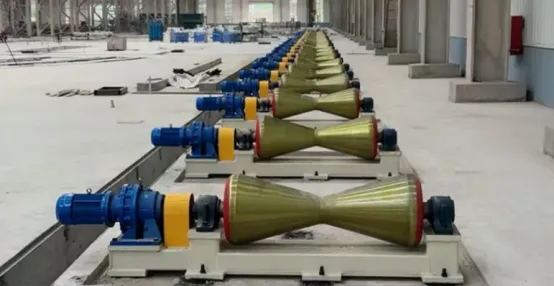
Pipe conveyor system provides stable strip transfer from pretreatment to spiral forming. Proper arrangement helps prevent feeding interruptions, strip deviation, and instability during forming and welding.
Where Should Pipe Handling Conveyor Systems Be Installed?
A typical production sequence is:
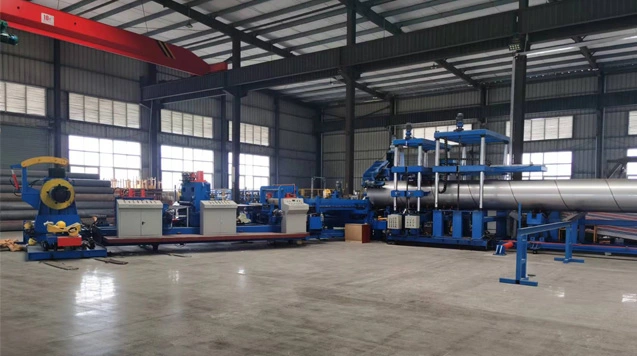
Uncoiling → Leveling → Strip End Shearing and Joining → Edge Processing → Strip Feeding → Guiding and Pre-Bending → Spiral Forming → Welding → Cut-to-Length Operations → Finished Pipe Discharge
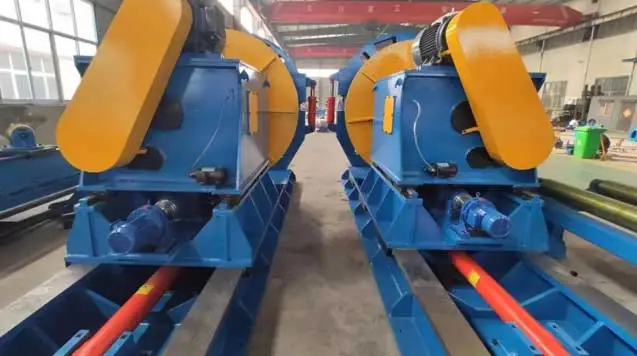
Install the feeding conveyors between strip pretreatment and the guiding and forming sections, according to the mill layout. Before installation, check the assembly drawings, foundation positions, designated feed line, and adjustment ranges of connected equipment.
How Should Conveyors Be Aligned with Pretreatment and Forming Equipment?
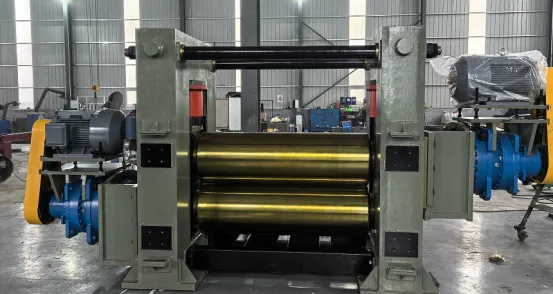
Leveling, trimming, and edge milling equipment should connect smoothly with the feeding conveyors. The conveyor centerline and strip travel direction must match the designated feed line to prevent lateral deviation or interference during transfer.
Check the strip position as it leaves pretreatment equipment, passes through the pipe conveyors, and enters the guiding and pre-bending sections. Correct misalignment at its source instead of relying on downstream guides to compensate for upstream problems.
Showcase of TXH's Project Cases
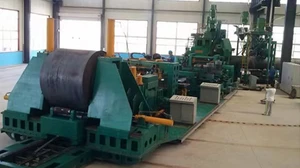
TXH's Bangladesh Heavy Spiral Mill project involved a heavy-duty spiral welded pipe production line designed for pipe diameters from 630 mm to 3620 mm. The equipment was installed and successfully put into production. This project illustrates the importance of coordinating production line equipment and process requirements. For each installation, conveyor positioning and strip alignment should be determined according to the actual mill layout and the manufacturer's technical specifications.
How Should the Layout Be Adjusted for Different Strip Specifications?
When strip width or thickness changes, verify that the conveyor's adjustment range, guiding devices, and clamping arrangements remain suitable for the new specification. The strip must be supported and guided securely without slipping, excessive pressure, or damage to its edges.
Conveyor speed should also be coordinated with the production line's operating speed. Use the tube mill manufacturer's specified operating ranges and commissioning procedures rather than applying the same settings to every strip specification.
How Should Conveyor Settings Be Checked During Commissioning?
During commissioning, check the following items and adjust them according to the equipment design and actual operating conditions.
Inspection item | What to check | Adjustment focus |
Feeding speed | Is strip movement continuous and stable? | Coordinate with adjacent equipment. |
Clamping pressure | Is there slipping, marking, or deformation? | Maintain grip without damaging the strip. |
Strip alignment | Does the strip drift sideways? | Check the centerline and guiding devices. |
Operating resistance | Is feeding unusually difficult? | Inspect upstream equipment and conveyor mechanisms. |
Vibration and interruptions | Are there abnormal movements or stops? | Check mechanical, electrical, and control systems. |
Start with the checks specified by the manufacturer. During trial operation, confirm that the strip travels smoothly into the forming section and that the equipment operates without abnormal resistance or vibration. Before operation and maintenance, review OSHA guidance on machine guarding and safeguarding equipment against machinery hazards. Apply the safety measures relevant to the equipment and facility, including appropriate guarding and energy isolation procedures.
Conclusion
Arranging pipe handling conveyor systems requires a clear production sequence, correct centerline alignment, compatible settings for different strip specifications, and systematic commissioning. Following these steps helps reduce feeding problems, simplify specification changes, and maintain stable strip delivery into the spiral forming machine.
Frequently Asked Questions (FAQs)
What Determines the Installation Position of Pipe Handling Conveyors?
The production sequence, mill layout, designated feed line, strip specifications, and connection requirements of adjacent equipment determine the installation position. The manufacturer's drawings should take priority over general layout recommendations.
How Can Strip Deviation Be Reduced During Conveying?
Check the alignment of upstream pretreatment equipment, conveyor centerlines, and guiding devices. Inspect the strip path at each transfer point to identify the source of deviation.
What Should Be Checked When Changing Strip Specifications?
Verify the available adjustment range, guiding position, clamping settings, and feeding stability for the new strip width and thickness. Follow the manufacturer's operating limits.
What Safety Checks Are Required Before Operation?
Inspect guards, emergency stops, moving components, and the surrounding work area. Follow applicable safety requirements and the equipment manufacturer's operating and maintenance instructions.
References / External Resources
1. Occupational Safety and Health Administration (OSHA) — Machine Guarding
Provides general guidance on guarding machinery and protecting workers from moving machine parts.
https://www.osha.gov/etools/machine-guarding/introduction
2. Occupational Safety and Health Administration (OSHA) — Safeguarding Equipment and Protecting Workers from Amputations
Provides guidance on recognizing and controlling machinery hazards, including hazards associated with conveyors and other stationary equipment.
https://www.osha.gov/sites/default/files/publications/osha3170.pdf