English
×
Search
A pipe hydrostatic testing machine verifies whether a finished steel pipe can withstand a specified internal water pressure without leakage, deformation, or failure. For pipe manufacturers, the right system is not simply the machine with the highest pressure rating. Equipment cost and performance depend on pipe diameter, wall thickness, test pressure, pipe length, production speed, sealing method, automation level, and integration requirements.
Because industrial hydro testers are normally configured around a specific production range, there is rarely a meaningful fixed price. A useful quotation should show the test range, cycle time, included auxiliary equipment, and future expansion capability.
The price of a hydrostatic tester is mainly determined by its mechanical load, pressure system, automation level, and production capacity.
The first factor is pipe size range. Large-diameter or heavy-wall pipe requires a stronger machine frame, larger sealing components, more powerful handling equipment, and higher structural rigidity. A tester for small ERW pipe therefore differs greatly from one designed for large LSAW or SSAW pipe.
The second factor is maximum test pressure. Higher internal pressure increases the load on the pipe ends, sealing system, clamping structure, valves, and pressure-boosting system. The required pressure should be based on actual pipe specifications and acceptance requirements rather than an unnecessarily high maximum.
The third factor is automation. A basic tester may need more operator involvement for loading, positioning, sealing, pressurizing, draining, and unloading. A more automated system can coordinate these steps through PLC control and integrate with upstream and downstream conveyors. This increases initial investment but can improve cycle consistency and reduce manual handling.
A supplier cannot configure the right machine from pipe diameter alone. Before requesting a quotation, prepare a clear technical specification covering:
Pipe outside diameter range
Wall thickness range
Pipe length range
Pipe material and grade
Maximum required test pressure
Required holding time
Target production capacity
Pipe end condition
Loading and unloading method
Available plant layout
Required automation level
Electrical standard
These parameters help determine frame strength, sealing arrangement, hydraulic capacity, water filling system, pressure-boosting system, and handling configuration.
For plants covering several pipe sizes, changeover time should also be considered. A machine may technically cover many diameters but still reduce productivity if sealing or tooling changes are slow.
Pipe diameter and test pressure directly influence machine design because internal pressure creates axial force at the pipe ends. As diameter and pressure increase, the required clamping and structural strength also increase.
A properly engineered hydro testing machine for pipe should therefore be selected according to the complete operating range rather than one nominal value. The supplier should evaluate the most demanding combination of diameter, wall thickness, material grade, and test pressure.
Oversizing every component is not always economical. It can increase machine cost, footprint, energy demand, and maintenance requirements. A better approach is to define the current production range, likely future range, and the maximum test condition the machine must reliably handle.
When comparing quotations, focus on the complete testing process rather than only the maximum pressure.
Sealing system: Pipe ends must remain sealed during filling, pressure buildup, holding, and depressurization. The sealing method should suit the pipe end condition and size range.
Pressure control: Stable pressure buildup and accurate monitoring support repeatable testing. The control system should clearly display pressure, test time, cycle status, and alarms.
Water filling and exhaust: Efficient filling and air removal improve test consistency and can shorten cycle time.Pipe handling: Conveyors, centering devices, lifting mechanisms, and transfer systems can have a major impact on production output.
Safety protection: High-pressure equipment should include interlocks, pressure relief, guarded operating areas, alarms, and controlled depressurization.
Data recording: Some production lines may require pressure curves, test results, pipe identification, and batch records for quality traceability.
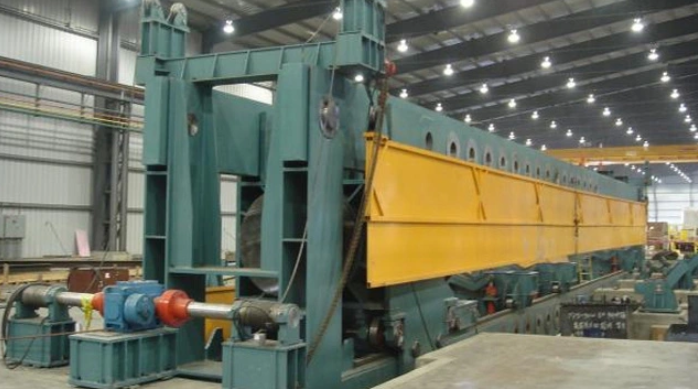
For heavy-wall or large-diameter applications, dedicated pipe hydrostatic testing equipment may be more appropriate because mechanical loads and handling requirements are substantially higher.
Start with the production process rather than the equipment catalog.
First, define the maximum and minimum pipe specifications. The supplier needs the full range, not only the most common diameter, to configure changeover components and handling systems correctly.
Second, define the required testing cycle. A machine that reaches the target pressure but cannot match line output can become a bottleneck. Loading, centering, sealing, water filling, pressurization, holding, depressurization, drainage, and unloading should be evaluated as one complete cycle.
Third, confirm whether the machine will operate offline or within an integrated production line. Inline systems may need to communicate with conveyors, marking equipment, inspection systems, or downstream machinery.
Fourth, assess the supplier's engineering support, commissioning capability, spare-parts support, and technical documentation. For customized industrial machinery, successful integration matters as much as the hardware itself.
Hydrostatic testing equipment is application-specific, so completed projects are useful when evaluating a supplier. Experience with different pipe diameters, pressure requirements, and plant layouts can help identify practical issues before installation.
TXH has completed a 1420 hydro tester project exported to India, providing a relevant reference for large-diameter pipe testing applications. Comparable project experience can help buyers assess whether a supplier understands similar handling, pressure, and production requirements.
To receive a useful quotation, provide more than a request for a “hydrostatic testing machine price.” Include the pipe OD range, wall thickness, length, material grade, required test pressure, holding time, target pieces per hour, pipe end condition, plant layout, automation preference, and destination country.
If production-line drawings or equipment interface details are available, include them as well. This reduces unnecessary back-and-forth communication and helps the supplier prepare a more accurate technical proposal.
There is no universal price because industrial systems are configured around pipe size, pressure, capacity, automation, and handling requirements. A complete technical RFQ is needed for an accurate quotation.
The machine should cover the highest required test pressure for the intended pipe range with an appropriate engineering margin. The correct rating depends on pipe specifications and applicable quality requirements.
Yes. Many systems can cover a defined diameter range, but changeover methods, sealing tools, handling equipment, and cycle time should be evaluated before purchase.
For continuous or high-volume pipe production, automation can reduce manual handling, improve cycle consistency, and simplify line integration. Its value depends on production volume, labor conditions, and required throughput.
The best way to compare hydrostatic testing machine prices is to compare solutions based on the same pipe range, pressure requirement, cycle time, and automation scope.
Request a hydrostatic testing machine quotation with your pipe OD, wall thickness, length, material grade, required pressure, and target output so the equipment can be configured around your actual production requirements.