Pipe Chamfering vs Beveling vs End Facing: Differences, Applications, and Machine Selection
Pipe chamfering, beveling and end facing are related machining operations, but they do not serve exactly the same purpose. Chamfering removes a sharp corner or creates a relatively small angled edge. Beveling prepares a larger angled surface, often for welding. End facing machines the pipe end into a flat, square and dimensionally consistent surface.
Pipe end preparation is the controlled machining of a pipe end to produce the geometry, surface condition and dimensional accuracy required for joining, inspection or subsequent processing.
In many steel pipe plants, one machine performs facing and beveling during the same cycle. Buyers should still define each required result separately before selecting equipment.
Pipe Chamfering vs Beveling vs End Facing
The three operations differ mainly in how much material they remove and what the finished pipe end must achieve.
| Comparison point | Chamfering | Beveling | End facing |
| Main purpose | Remove sharp edges or form a small angled edge | Prepare an angled weld surface | Produce a flat and square pipe end |
| Finished geometry | Narrow chamfer | Wider bevel or weld preparation | Flat end face |
| Typical application | Handling, fitting and light edge preparation | Butt-weld joint preparation | Length control and end squareness |
| Welding role | May assist assembly | Directly affects weld-joint geometry | Establishes a consistent reference face |
| Tool movement | Around the inner or outer edge | Across a controlled portion of wall thickness | Across the full pipe-end face |
| Key inspection points | Edge consistency and burr removal | Angle, root face and surface quality | Flatness, squareness and length |
| Can be combined? | Yes | Yes | Commonly combined with chamfering or beveling |
Chamfering is appropriate where the primary goal is to remove a dangerous or inconvenient sharp edge. Beveling is more closely connected with welding procedure requirements. ISO 9692-1:2013 specifies types of joint preparation for several steel welding processes and applies to full-penetration butt welds and fillet welds. ASME B16.25 covers the preparation of butt-welding ends, including welding bevels and the internal or external shaping of heavy-wall components.
End facing does not necessarily create an angle. Its purpose is to establish a clean face that is reasonably perpendicular to the pipe axis. This helps downstream measurement, alignment and joining remain consistent.
What Each Pipe-End Operation Accomplishes
A finished pipe may need more than one end-preparation operation. A pipe could first be faced to correct its end surface and then beveled for welding. Its inner or outer edge may also be chamfered to remove burrs.
The most common processing goals are:
Safe handling: removing burrs and sharp edges that can interfere with transport or assembly.
Reliable welding: creating the specified bevel, root face and joint preparation for the selected welding procedure.
Dimensional consistency: producing a flat end that supports accurate pipe length, alignment and fit-up.
Downstream compatibility: preparing the pipe for coupling, expanding, coating, inspection or field installation.
The required bevel should not be selected from a generic industry habit alone. Wall thickness, material, welding process, joint design and the applicable project standard all influence the final geometry. ISO 9692-1 also notes that different preparation types and dimensions may be stipulated for partial-penetration butt welds.
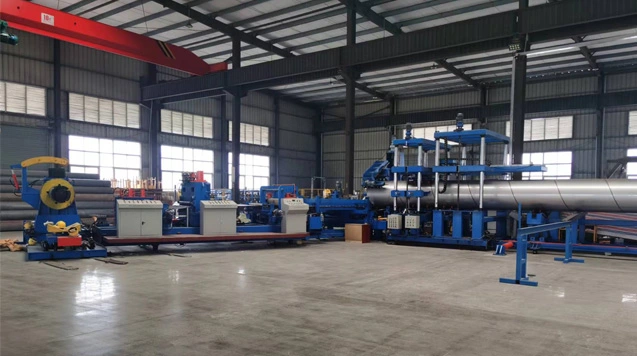
A properly specified pipe chamfering machine can combine flat-end machining and edge preparation in one station. TXH separates its range into large-diameter, small-diameter and double-station configurations, allowing the machine layout to follow the pipe range and production method.
How Pipe Diameter and Wall Thickness Affect Machine Selection
Pipe diameter affects cutterhead size, clamping force, lifting arrangement and the distance between machining heads. Wall thickness influences cutting load, tool selection, feed rate and the amount of material removed.
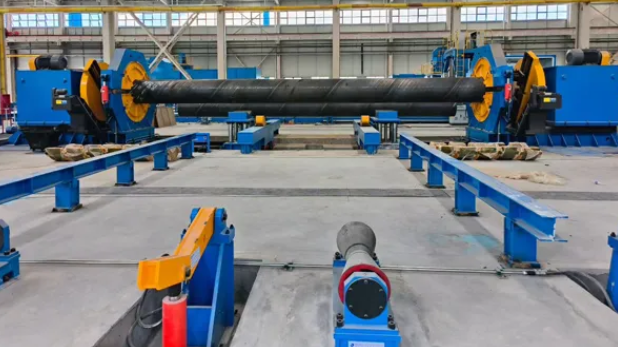
Small-diameter pipes are often produced at higher volumes and may require rapid automatic feeding. TXH’s small-diameter machine uses opposing heads, hydraulic clamping and an automatic hydraulic pickup-and-delivery device. Each cutterhead is described with two tool holders: one for facing and one for chamfering.
Large-diameter pipes demand a more substantial support and positioning system. TXH’s large-diameter configuration uses symmetrical main machines, lifting devices, sliding seats, cutterheads and hydraulic clamping. Its published process combines flat-end machining and chamfering within the same operating cycle.
Before choosing a machine, confirm:
Minimum and maximum outside diameter.
Minimum and maximum wall thickness.
Pipe length, weight and allowable end deformation.
Required face, internal chamfer and external bevel geometry.
Material grade and expected cutting resistance.
Target cycle time and annual production volume.
Manual, semi-automatic or fully automatic handling.
A pipe with a large outside diameter but a thin wall may require careful support to prevent vibration or deformation. A smaller thick-wall pipe may create a higher cutting load even though its overall diameter is lower. Diameter alone is therefore not enough for equipment selection.
Single-Station vs Double-Station Chamfering Machines
The phrase “double station” can cause confusion. It may describe a machine processing both ends of one pipe, or separate stations processing more than one pipe. Buyers should ask the supplier to define the movement and capacity in the proposed layout.
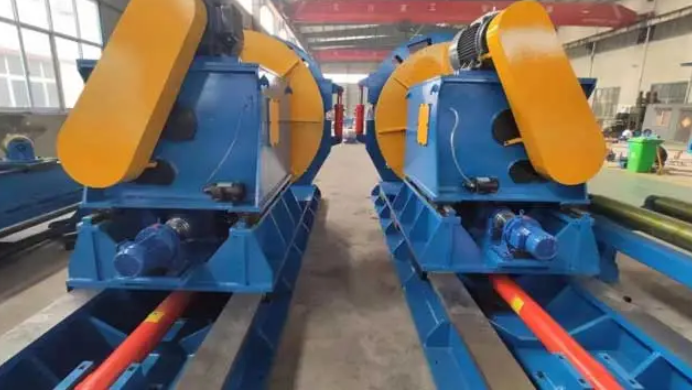
TXH’s double station chamfering machine for steel pipe is described as equipment that can mechanically perform flat-end chamfering on two steel pipes simultaneously. This arrangement can improve throughput where pipe supply, removal and inspection are coordinated with the machining cycle.
A simpler configuration may be sufficient for low-volume production, varied pipe sizes or offline repair work. A higher-output system becomes more valuable when identical pipe specifications run for long batches and the surrounding handling equipment can keep both stations supplied.
The machining head should not be evaluated separately from loading and unloading. A fast cutting cycle provides limited benefit when pipes wait for cranes, manual alignment or downstream clearance.
Production-Line Integration and Procurement
End preparation often sits between pipe forming, testing, dimensional correction and coating. The machine must therefore exchange pipes smoothly with the preceding and following stations.
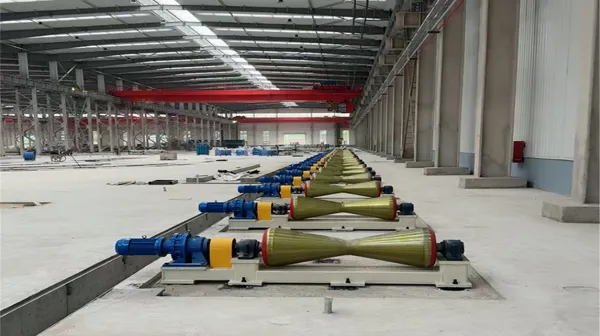
A steel pipe delivery machine can reduce manual movement by transferring pipe between processing positions. TXH groups conveyors, rotating roller tables, pullers and droppers within its pipe-delivery equipment range.
Where pipe-end diameter and roundness need correction, a steel pipe end expanding machine performs a different operation from chamfering. It uses mechanical expansion to shape and size the pipe end rather than cutting its end face.
A practical procurement review should cover:
Pipe specifications and required finished-end drawing.
Applicable welding, dimensional and customer standards.
Cutterhead design, tool type and expected tool-change procedure.
Clamping, centering and support arrangements.
Loading, unloading and line-control interfaces.
Finished-end inspection method and acceptance tolerance.
Installation space, utilities, commissioning and operator training.
Suppliers should receive actual pipe drawings and sample specifications before final design. Descriptions such as “standard bevel” or “large pipe” are not precise enough to define cutter travel, machine stiffness or control logic.
Conclusion
Chamfering removes sharp edges, beveling creates weld preparation, and end facing establishes a flat reference surface. One machine may perform all three, but the required geometry must be defined separately. Select equipment by pipe range, wall thickness, joint standard, production rate, clamping method and line integration—not by machine name alone.
Frequently Asked Questions
Is pipe chamfering the same as pipe beveling?
Not exactly. Chamfering usually creates a smaller angled edge, while beveling removes more material to form a defined joint-preparation surface. The terms are sometimes used interchangeably by equipment suppliers, so the finished-end drawing should control the specification.
Why is end facing necessary before beveling?
End facing creates a flat and consistent reference surface. This makes it easier to control pipe length, bevel width, root face and alignment during subsequent machining or welding preparation.
Can one machine face and bevel both pipe ends?
Yes. Many industrial machines use opposing machining heads to process both ends. The supplier should confirm whether both ends are processed simultaneously or sequentially and how the pipe is centered and clamped.
Which machine is suitable for large-diameter steel pipe?
A large-diameter machine normally needs robust lifting, support, clamping and sliding-head systems. Final selection must also consider wall thickness, pipe weight, material and required end geometry.
Does a double-station machine always double production?
No. Output also depends on loading, alignment, cutting time, tool changes, unloading and downstream capacity. A double-station machine improves production only when the complete handling system supports its operating cycle.
What information is needed for a machine quotation?
Provide pipe diameter, wall thickness, length, weight, material, required end drawing, applicable standard, production rate, handling method and available installation space. Samples or detailed drawings reduce the risk of specification errors.