What Is the Difference Between Spiral Welded Pipe, SSAW Pipe and Helical Submerged Arc Welded Pipe?
If you work with spiral pipe products, you have likely encountered the terms spiral welded pipe, SSAW pipe, and helical submerged arc welded pipe. They appear in product listings, technical documents, and production-line discussions, but they are not always interchangeable.
Spiral welded pipe describes pipe with a spiral seam. SSAW and helical submerged arc welded pipe go further by specifying submerged arc welding. In short, one term describes the general configuration; the other two specify the welding process.
This distinction matters when comparing specifications or evaluating equipment: wording changes how you interpret manufacturing requirements. Knowing each term helps you compare products and identify the right equipment for your target pipe range.
What Is Spiral Welded Pipe?
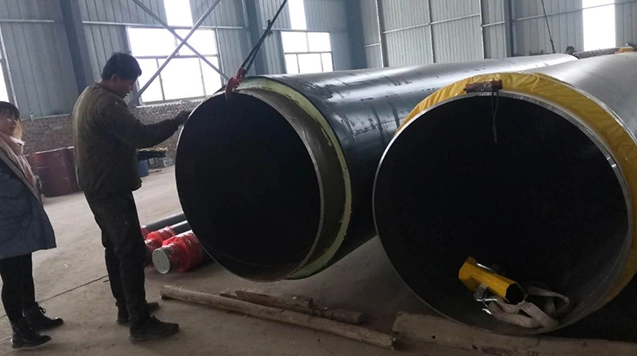
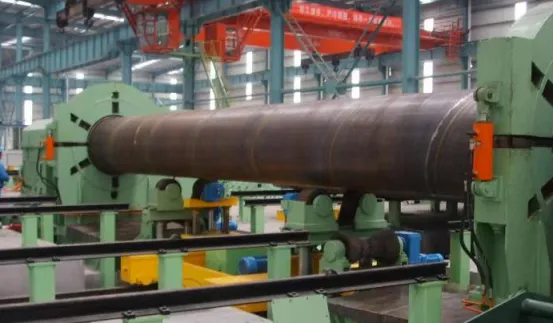
Spiral welded pipe is made by shaping a continuous steel strip into a cylinder and welding the edges as the strip follows a spiral path. Unlike a straight seam, the weld wraps around the pipe as it forms.
A key advantage is that one steel pipe production line can produce multiple diameters, determined by strip width, wall thickness, forming setup, material properties, and dimensional tolerances.
Importantly, "spiral welded pipe" describes how the pipe is shaped—not how the weld is made. This distinction matters when comparing equipment or writing purchase specifications.
Two pipes sharing the same product name can still differ in welding method, material grade, dimensions, and inspection requirements, which changes the needed equipment and documentation. For new production lines, start with the products you intend to make: define diameter and wall-thickness range, material grades, and inspection criteria before selecting equipment.
What Does SSAW Pipe Mean?
SSAW stands for Spiral Submerged Arc Welded—pipe formed with a spiral seam and joined by submerged arc welding.
In submerged arc welding, an arc burns beneath a layer of granular flux. When parameters are matched to material, wall thickness, and joint preparation, it supports productive, consistent welding.
Manufacturing begins with strip preparation and spiral forming; edges are aligned and welded under controlled conditions. Internal and external passes may be used to meet weld-quality requirements.
Stable production depends on forming accuracy, seam-gap control, welding parameters, and synchronized material handling—forming and welding must work together.
SSAW is more specific than "spiral welded pipe" because it names the welding method, but the abbreviation alone does not establish material grade, pressure suitability, inspection coverage, or standard compliance.
What Is a Helical Submerged Arc Welded Pipe?
A helical submerged arc welded pipe is formed along a helical path and welded by submerged arc welding. In common industrial usage, this describes essentially the same product category as SSAW pipe.
"Helical" and "spiral" both describe a winding seam that progresses around the pipe as it extends. Wording varies across spiral welded pipe manufacturers, documents, and markets.
The two names usually overlap rather than denote different pipe types. Still, follow the definition in any contract, drawing, or applicable standard for a given project.
Terminology is not performance. A pipe's suitability depends on material, dimensions, manufacturing quality, inspection results, and applicable requirements—not on whether the name says spiral, helical, or SSAW.
Spiral Welded Pipe vs. SSAW Pipe vs. Helical Submerged Arc Welded Pipe: Key Differences Explained
Comparison point | Spiral welded pipe | SSAW pipe | Helical submerged arc welded pipe |
Term type | Broad manufacturing description | Process-specific pipe term | Process-specific pipe description |
Seam geometry | Spiral seam | Spiral seam | Helical seam |
Forming method | Commonly formed from steel strip | Spiral forming | Helical forming |
Welding process identified by the term | Not necessarily | Submerged arc welding | Submerged arc welding |
Relationship between names | Broad term that may cover different welding processes | Usually overlaps with helical submerged arc welded pipe | Usually overlaps with SSAW pipe |
Information needed for specification | Exact process, material, dimensions, and requirements | Material grade, applicable standard, dimensions, and acceptance criteria | Material grade, applicable standard, dimensions, and acceptance criteria |
Spiral welded pipe is the broader term; SSAW and helical submerged arc welded pipe specifically identify submerged arc welding. The latter two usually refer to the same product category, but names never substitute for checking technical requirements—grades, dimensions, inspection scopes, and acceptance criteria can differ.
How Are Spiral Submerged Arc Welded Pipes Manufactured?
Steel strip preparation
Strip selection and preparation—material ID, dimensions, surface and edge condition—set up forming stability and weld quality.
Spiral forming
The strip is shaped into a cylinder along a spiral path. Forming settings and strip dimensions determine geometry; consistent alignment maintains diameter and seam preparation.
Submerged arc welding
Edges are joined along the spiral seam. Parameters must suit material, wall thickness, joint preparation, and required weld properties; internal/external passes must coordinate with forming.
Cutting and dimensional control
At specified length, the pipe is cut and checked for diameter, wall thickness, length, straightness, and end geometry.
Inspection and final testing
Per the product specification, inspection may include nondestructive weld examination, dimensional checks, hydrostatic testing, finishing, marking, and documentation.
Line performance depends on the complete system—forming, welding, inspection, and handling must work together.
Which Standards Apply to SSAW and Other Welded Line Pipes?
API Specification 5L
API Spec 5L covers line pipe within its scope, including manufacturing requirements, product properties, inspection, testing, marking, and traceability.
Official reference: API Specification 5L
ISO 3183
ISO 3183 specifies seamless and welded steel pipe for petroleum and natural gas pipeline transportation systems, interpreted within the standard's scope and product conditions.
Official reference: ISO 3183:2019
These standards do not automatically apply to every "spiral welded pipe"; other applications follow different product standards, industry requirements, or project specifications.
Showcase of TXH's Project Cases
TXH’s project experience provides a practical example of how spiral pipe production equipment is configured for different manufacturing needs. For instance, its Baotou steel plant project involved heavy-duty spiral welded pipe equipment covering diameters from 630 mm to 3,620 mm. Projects like this help illustrate the production capabilities behind the terminology and give buyers a concrete reference when evaluating equipment for their own pipe specifications.
FAQs
What Are the Main Advantages of Spiral Welded Pipe?
Spiral welded pipe allows large-diameter pipe production from steel strip of varying widths, offering diameter flexibility, efficient material use, and suitability for long-distance pipelines, water transmission, and other industrial applications.
How Do You Choose the Right Spiral Welded Pipe for a Project?
Consider application, operating pressure, diameter, wall thickness, steel grade, corrosion conditions, and applicable standards. Also evaluate welding quality, inspection requirements, and manufacturer capabilities.
What Are the Main Machines in an SSAW Pipe Production Line?
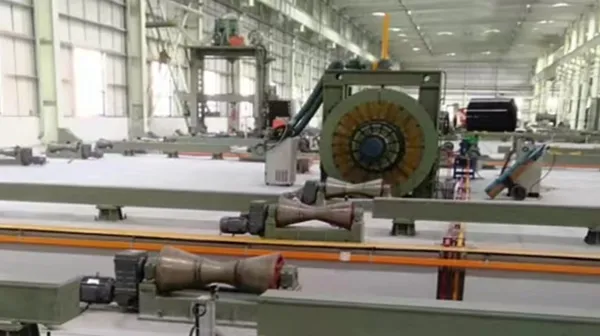
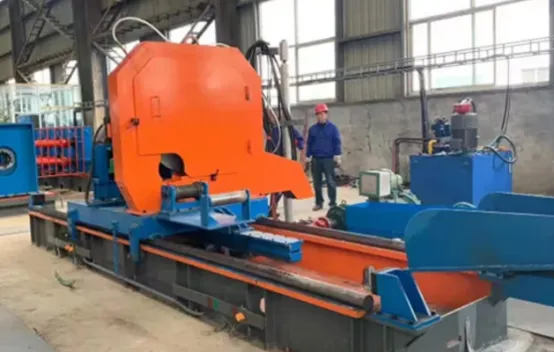
A typical line includes an uncoiler, strip leveling, edge milling, forming system, submerged arc welding equipment, cutting unit, and conveying systems, plus optional ultrasonic testing, hydrostatic testing, and pipe-end finishing.
References / External Resources
API Specification 5L
ISO 3183:2019