English
×
Search
Replacing an entire production line requires significant capital investment and longer installation time, while a well-planned retrofit can improve productivity, quality, and automation without rebuilding the whole system. A retrofit is usually suitable when the main mechanical structure remains reliable and only specific sections limit performance. However, replacement becomes a more practical choice when the equipment can no longer meet future production goals.
There is no universal answer to whether an old spiral pipe mill should be upgraded or replaced. Manufacturers need to evaluate the current equipment from both technical and business perspectives.
The following factors are essential to think about when making the decision:
| Factor | Retrofit May Be More Suitable | Replacement May Be Needed |
|---|---|---|
| Equipment condition | Main structure remains stable | Severe mechanical wear or deformation |
| Production capacity | Minor improvement is required | Output target exceeds original design |
| Pipe specifications | Similar diameter and thickness range | New product range requires different equipment |
| Product quality | Control or inspection upgrades can solve issues | Accuracy cannot be maintained |
| Automation | Electrical and control upgrades are possible | Entire production concept is outdated |
| Investment budget | Lower-cost improvement is preferred | Long-term expansion requires new equipment |
The first step is to understand the actual condition of the equipment rather than judging only by its age.
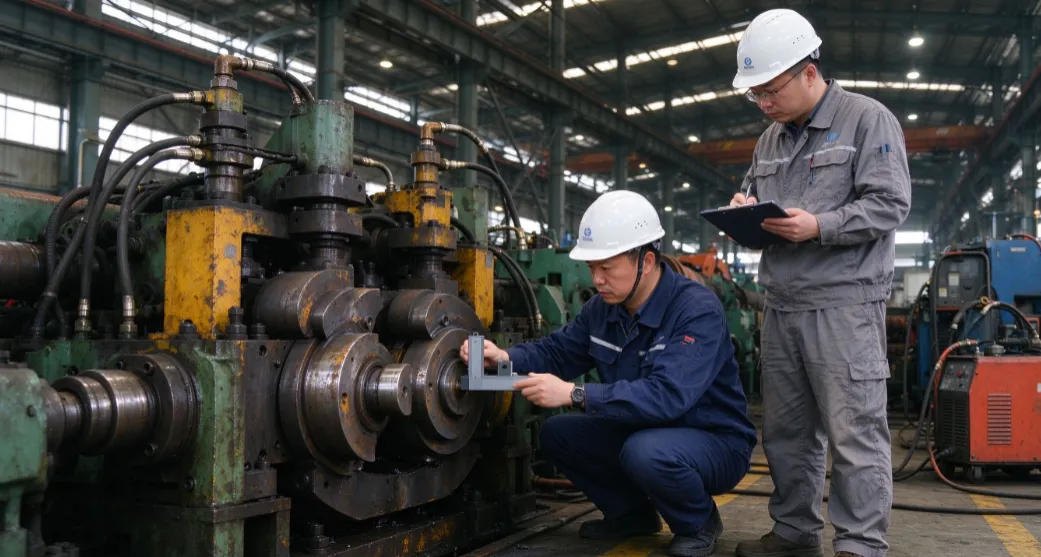
When a spiral pipe mill is old, it does not mean this machine is unsuitable for continued operation. Many manufacturers continue using a reliable spiral pipe mill machine after years of operation. If the main frame, forming section, welding system, and transmission components remain stable, upgrading key systems can possibly extend the service life.
Important inspection points include:
Forming machine rigidity and alignment
Wear condition of mechanical components
Reliability of hydraulic systems
Stability of welding equipment
Availability of spare parts
Condition of electrical cabinets and control systems
In many cases, the biggest limitation of older equipment is outdated controls, unsupported components, or inefficient operation systems. Modernizing these areas can restore reliability and improve daily operation.
Increasing production capacity is one of the most common reasons manufacturers consider equipment upgrades. Limited output does not always mean the entire line must be replaced. The actual bottleneck should be identified first.
Common capacity limitations include:
Slow forming speed
Frequent equipment downtime
Manual adjustment processes
Low welding efficiency
Long setup time between different pipe specifications
If only one section restricts production, it is a cost-effective solution to upgrade that certain section.
For example, improvements may include:
Upgrading electrical control systems
Improving welding control
Adding automatic adjustment functions
Optimizing material handling processes
But if the factory requires a major increase in output beyond the original design capability, a new spiral welded pipe production line may provide better long-term value.
Production bottlenecks may also come from downstream processes. Upgrading supporting equipment, such as a pipe end chamfering machine, can improve workflow efficiency and reduce processing delays.
Steel pipe manufacturers often change their product strategy over time. A mill originally designed for one product range may later face other demands. Before replacing equipment, manufacturers can choose to evaluate whether the current line can be adapted.
A retrofit involve:
Upgrading forming components
Adjusting production parameters
Improving welding capability
Adding inspection systems
When the required specifications exceed the fundamental design limits of the machine, replacement becomes more reasonable .
Production quality is another important factor in the retrofit decision.
As customers require tighter tolerances and more consistent performance, older equipment may struggle with:
Pipe diameter variation
Welding instability
Dimensional inconsistency
Increased inspection failures
Instead of replacing the complete line, manufacturers can often improve quality through targeted upgrades, such as:
More precise forming components
Improved welding control systems
Online monitoring equipment
Automated measurement systems
Modern inspection solutions, including ultrasonic pipe testing equipment (Internal Link), can help manufacturers strengthen quality control throughout production.
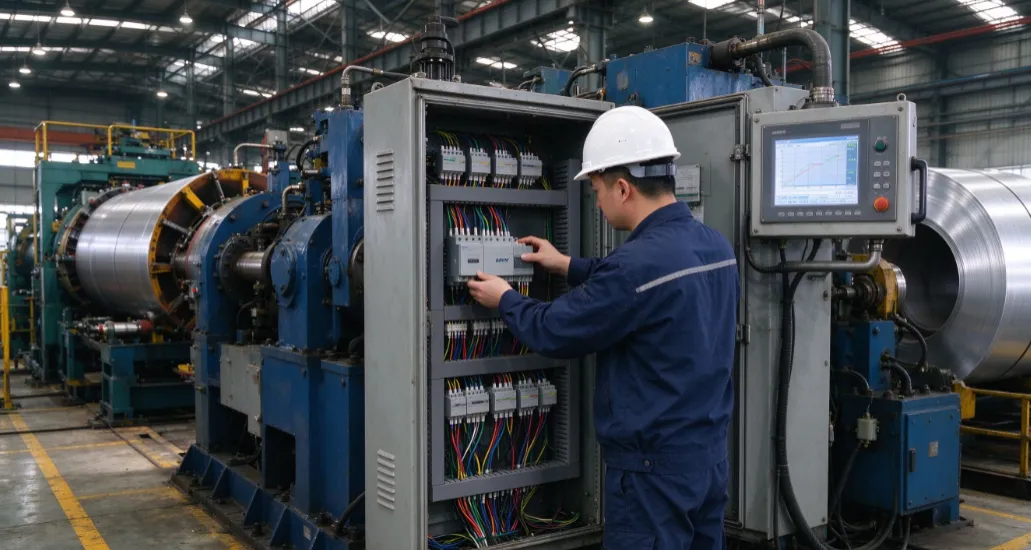
Automation has become an important factor affecting production efficiency and competitiveness.
Many older spiral pipe mills still rely on manual operation for:
Parameter adjustment
Equipment monitoring
Quality inspection
Production data recording
While retrofit can modernize these areas through:
PLC control system upgrades
New HMI interfaces
Automatic production monitoring
Digital data collection
Improved safety systems
Automation upgrades can reduce operator dependence, improve production consistency, and make maintenance easier. If the mechanical structure is still suitable, upgrading automation provides many benefits without replacing the whole production line.
Budget is always a key factor, but manufacturers should not compare only the price of equipment purchase.
A retrofit project may involve:
Replacement components
Installation costs
Production downtime
Operator training
Commissioning
A new production line requires:
Equipment investment
Factory preparation
Installation and commissioning
New operation procedures
Longer project planning
A retrofit is often attractive when the existing equipment can still meet future production requirements after improvement; but if upgrade costs continue increasing while production capability remains limited, investing in a new line may provide better long-term benefits.
The right decision should consider:
Investment cost + expected production improvement + future market requirements
An existing spiral pipe mill is usually a good retrofit candidate when:
The main mechanical structure remains stable
Current pipe specifications are still suitable
Only specific systems limit performance
Automation needs improvement
Quality problems can be solved through targeted upgrades
The factory wants to extend equipment service life
So it is critical to have a professional equipment evaluation before investment. That can help identify which components should be upgraded and which should remain unchanged.
A new production line may be considered when:
The machine structure has reached the end of its useful life
Required pipe specifications exceed current capability
Production demand has grown significantly
Maintenance costs continue increasing
Quality requirements cannot be achieved consistently
Future expansion requires completely different equipment capability
In these situations, upgrading an old system may only delay necessary investment.
The decision depends on equipment condition, production requirements, pipe specifications, quality targets, automation needs, and investment plans.
Common upgrade areas include electrical systems, PLC controls, welding equipment, inspection systems, forming components, and automation solutions.
A retrofit can improve capacity when bottlenecks come from outdated controls, inefficient processes, or specific equipment sections. But it may not solve limitations caused by the primary design.
Not necessarily. Retrofit can be a practical choice when the existing equipment structure remains suitable for future production needs.
Choosing between retrofitting and replacing an existing spiral pipe mill requires a complete evaluation of equipment condition, production goals, product requirements, automation needs, and investment budget.
For manufacturers whose equipment foundation remains strong, targeted upgrades can improve efficiency, accuracy, and reliability. When production requirements have exceeded the original design limits, a new spiral welded pipe production line may be the better long-term solution.