Where Does Pipe End Facing and Beveling Fit in a Spiral Pipe Production Line?
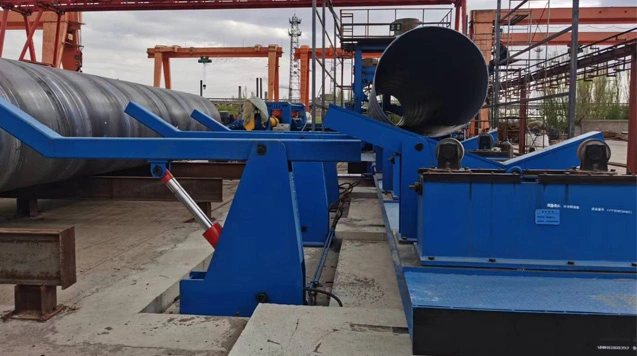
After a spiral welded pipe is formed, welded, and cut to length, its ends may need machining before joining or delivery. Facing creates a flat end surface perpendicular to the pipe axis; beveling forms an angled edge for welding. Both are finishing operations in a spiral welded pipe production line. Their exact position depends on the inspection plan and line layout.
What Is the Difference Between Pipe End Facing and Beveling?
Pipe end facing removes uneven material to create a flat, square end and improve alignment between pipe sections. Pipe end beveling machines the edge to a specified angle or profile, such as a V- or U-preparation, to provide access for welding and support the required penetration and fusion.
A combined facing and beveling machine can perform both operations in one setup. It is different from a pipe cutting or intersection-cutting machine, which cuts pipe to length or forms branch profiles rather than finishing the ends of straight pipe sections.
Where Does End Facing and Beveling Fit in the Spiral Pipe Production Process?
A typical sequence includes strip preparation, forming, internal and external SAW welding, cutting to length, inspection, hydrostatic testing where required, end preparation, final checks, and marking or coating.
Some production arrangements place UT, RT, and hydrostatic testing before facing and beveling, followed by final checks of the weld and pipe ends. This is an example, not a universal sequence; follow the product standard, customer specification, and plant layout.
End preparation is therefore a downstream finishing operation. It prepares individual pipe sections for circumferential field welding, connection, or delivery.
How Does a Pipe End Facing and Beveling Machine Work?
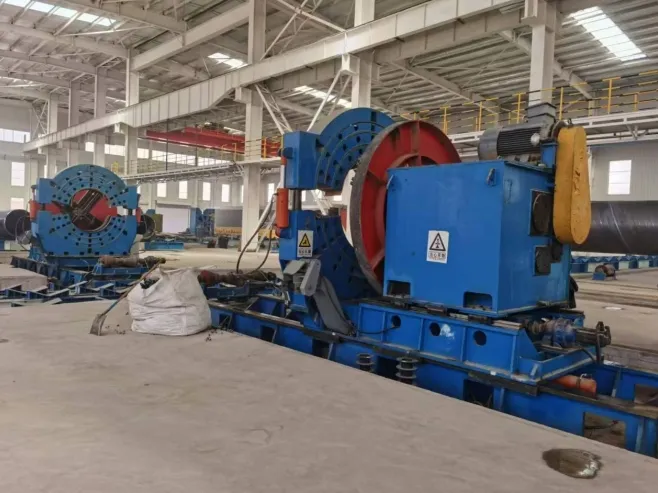
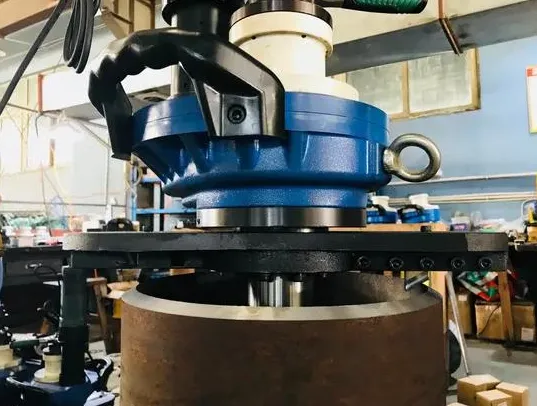
A typical machine combines a cutter or milling head, pipe clamping, a feed mechanism, support or lifting devices, and a control system. The operating sequence is:
Transfer and support the pipe at the machining station.
Clamp it securely to limit movement and vibration.
Advance the cutter head; facing tools true the end surface and beveling tools machine the specified edge profile.
Retract the tools, release the clamp, and transfer the pipe.
Check the end face and bevel dimensions before release.
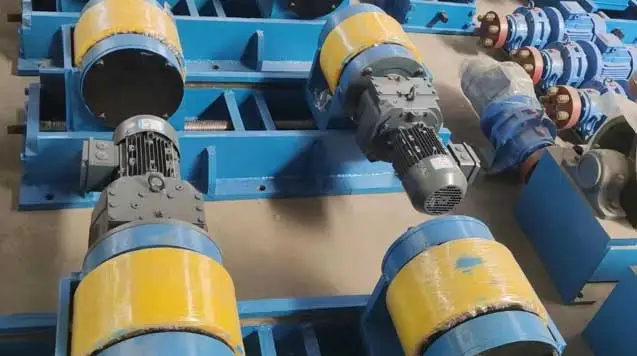
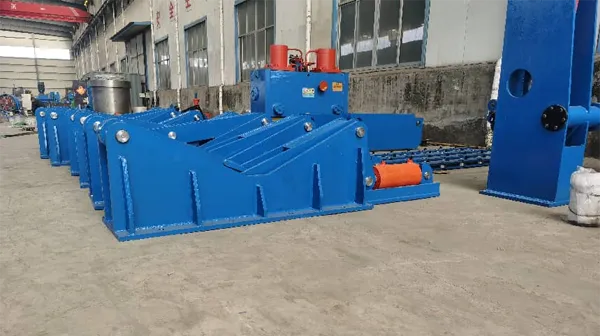
Large-diameter configurations may use opposed machining heads, sliding seats, lifting supports, hydraulic clamping, and motor-controlled feed. The arrangement depends on pipe range and whether one or both ends are machined in a cycle. See TXH's pipe end facing and beveling machine for the machine structure and operating sequence.
What Should Be Checked After End Preparation?
Inspectors should verify:
End-face flatness and squareness to the pipe axis.
Bevel angle, depth, root face, and required profile.
Dimensional consistency around the circumference.
Burrs, sharp edges, slag, and cutting residue.
Fit-up conditions, including specified root gap and mismatch.
Bevel geometry must follow the welding procedure and project specification. ASME B16.25 covers butt-welding end preparation, including bevels, dimensions, and tolerances. TWI also explains how bevel angle and root gap affect root access and incomplete-fusion risk. No single bevel profile applies to every pipe; material, wall thickness, welding process, and joint design matter.
How Should Buyers Select End Facing and Beveling Equipment?
Start with the actual pipe range and production needs:
Outside diameter, wall thickness, length, and material.
Required end-face accuracy and bevel profile.
Whether one or both ends need facing, beveling, or both.
Production volume, cycle time, and automation level.
Clamping stability, pipe support, cutter arrangement, feed control, and changeover time.
Large-diameter pipeline products may require a large-diameter steel pipe chamfering machine with stable support and positioning. Smaller pipes or batch work may use more compact steel pipe chamfering machines. Select equipment by the required finished geometry and production range, not maximum diameter or nominal speed alone.
FAQs About Pipe End Facing and Beveling
1. Is pipe end facing the same as beveling?
No. Facing makes the end surface flat and square; beveling creates an angled edge or welding preparation. One machine may perform both.
2. Why is beveling required before pipe welding?
A specified bevel provides access to the joint root and helps achieve the required penetration and fusion. Its profile must follow the qualified welding procedure.
3. Does every spiral welded pipe need both facing and beveling?
No. Requirements depend on pipe-end design, joining method, customer specification, and applicable standard.
4. Is end facing and beveling performed before or after hydrostatic testing?
The sequence depends on the line layout and inspection plan. Some processes test pressure before end preparation and perform final checks afterward; other approved arrangements may differ.