Online vs Offline Pipe Finishing: Which Layout Fits a Spiral Pipe Plant?
After forming and welding, a spiral pipe mill must coordinate cutting, end preparation, inspection, hydrotesting, coating, marking, and handling. Online, offline, or hybrid finishing affects line balance, floor space, inspection, and expansion. The choice depends on product mix, station capacity, and factory conditions.
What Does Online Pipe Finishing Mean?
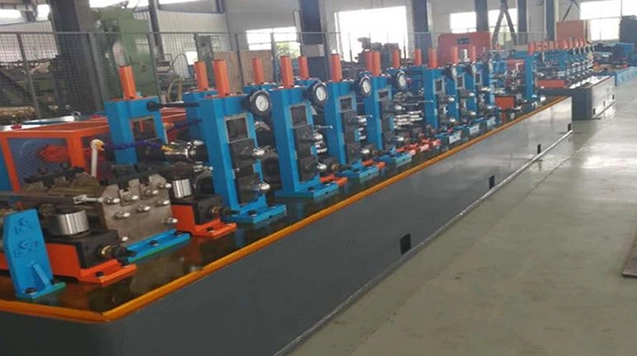
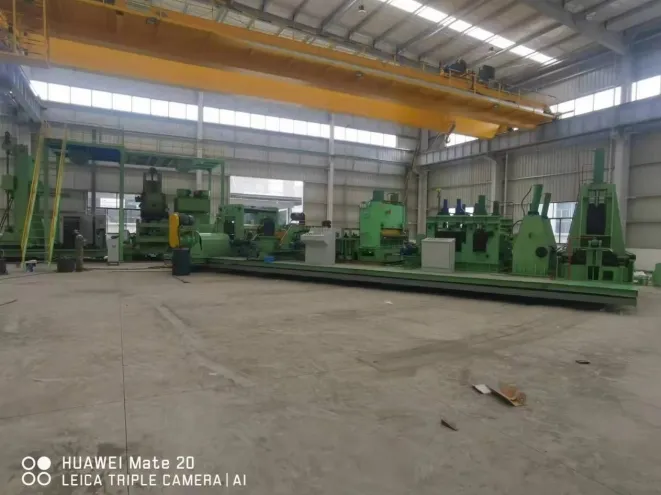
In an online layout, downstream stations connect directly to the mill. After cutting, rollers or transfer tables move pipes to facing, beveling, and inspection in the upstream production rhythm.
This reduces lifting and transport and suits stable product ranges. However, a slow or unavailable station can create queues and interrupt the main line. Buffer space and a reject route are important.
What Does Offline Pipe Finishing Mean?
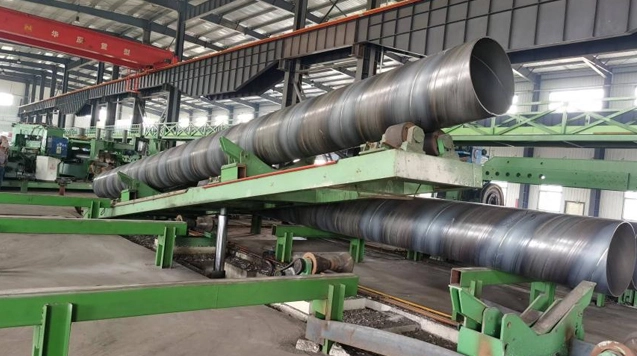
In an offline layout, pipes move to a separate finishing or inspection area and may wait in a buffer yard or rack for batch processing. Hydrotesting, NDT, dimensional checks, end preparation, coating, and marking can run independently of forming and welding.
Buffer storage allows servicing, repair, and reinspection without necessarily stopping the mill. The trade-offs are extra handling, transfer routes, and storage space.
Online vs Offline Pipe Finishing: Key Differences
Factor | Online layout | Offline layout |
Flow | Continuous, short transfers; queues can affect the main line. | Buffer storage separates mill output from downstream work. |
Equipment use | Suits stable, high-volume products; changeovers may cause waiting. | Batch scheduling supports different specifications. |
Inspection | Needs nearby reject and rework routes. | Easier to isolate, reinspect, and document rejected pipes. |
Space | Compact route but needs building length, crane span, and roller capacity. | Needs storage, transfer aisles, and a separate area. |
Expansion | Integrated investment; changes may affect the mill. | Easier staged installation. |
Which Equipment Should Be Online or Offline?
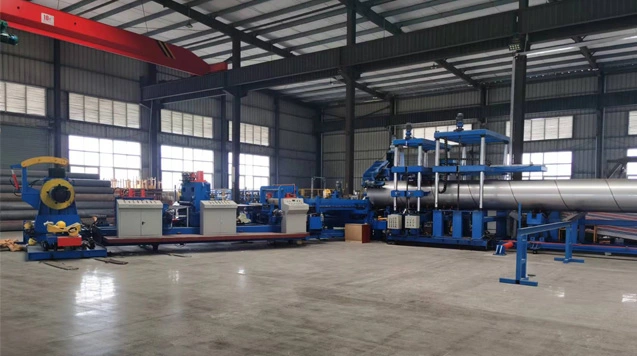
A hybrid layout is common because stations have different cycle times. Cutting and basic end preparation may sit near the mill when sizes and bevel requirements are stable. Hydrotesting and full weld inspection may use a separate bay for safe buffering, repair, and retesting. Coating, marking, weighing, and packing can form another downstream area.
Integrated end preparation suits stable dimensions; a dedicated station can simplify changeovers for mixed sizes. See the double station chamfering machine for steel pipe.
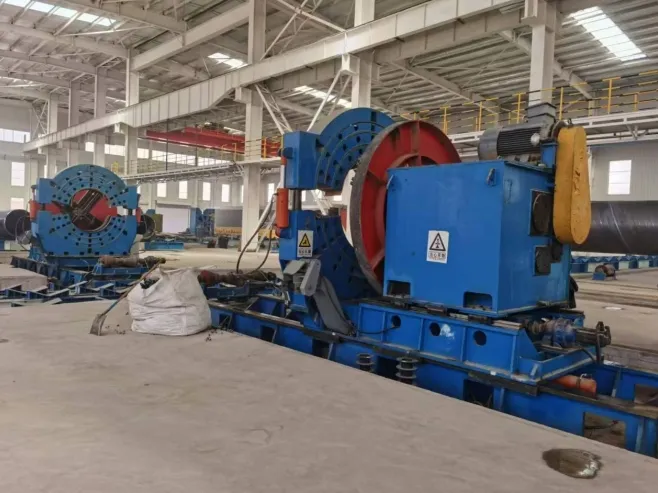
Pressure testing and NDT should follow required coverage and acceptance criteria. A hydrotester checks pressure integrity; UT and RT examine weld or material conditions and are not interchangeable. A steel pipe hydrostatic pressure testing machine and industrial X-ray equipment for steel pipe inspection can be arranged as separate downstream stations.
Rollers, conveyors, rotating devices, and lifting equipment must suit pipe size and weight. A steel pipe delivery machine can support transfer, but route, buffer capacity, and crane access must be planned together.
How Should a Spiral Pipe Plant Choose Its Layout?
Product mix: Confirm pipe diameters, wall thicknesses, grades, and changeover frequency.
Production balance: Compare finishing and testing capacity with mill output; identify bottlenecks.
Inspection rules: Define methods, coverage, witnessing, and repair reinspection.
Plant conditions: Check building space, floor loading, cranes, foundations, storage, and test-area safety.
Expansion: Plan phased modules and reserve utility, data, and material-flow interfaces.
Before commissioning, ensure each pipe remains identifiable through inspection, repair, retest, and dispatch. Link records to its number and specification. API Specification 5L addresses manufacturing, inspection, testing, marking, and traceability for applicable line pipe; confirm the edition and project requirements. See API Specification 5L and ISO 3183:2019, where applicable.
TXH Pipe Finishing and Testing Line Solutions
TXH supplies spiral pipe lines and downstream chamfering, hydrotesting, UT, X-ray, handling, coating, and insulation equipment. Layout planning should match pipe range, inspection scope, output, and factory conditions. Capacity, transfers, buffers, and traceability must work as one system.
FAQs About Online and Offline Pipe Finishing
1. Is online finishing always more productive?
No. It shortens transfers when products and cycle times are stable. Slow stations or frequent changeovers can create queues.
2. Does offline inspection reduce product quality?
No. Quality depends on method, coverage, equipment, personnel, calibration, and acceptance criteria, not layout.
3. Which layout suits a plant producing many pipe sizes?
Offline or hybrid layouts allow independent batch scheduling. Check throughput, storage, and handling capacity.
Choose online finishing for stable products and matched station speeds; choose offline for buffering, batch scheduling, inspection isolation, and staged expansion. A hybrid layout often balances production flow and independent quality control.